Merzouga Weather by Month: Temperatures & Rain (2026 Guide)
Merzouga Weather: What Our Guests Ask Us Most
“What will the weather be like?” is the first question almost every guest sends us before a stay at Relaxing Desert Camp. It is a good question, because the Merzouga weather changes a lot between seasons, and even between day and night on the same date.
In this guide we put the real numbers on the table: average highs and lows for every month, rainfall, humidity and hours of sunshine, using 30 years of climate data for Merzouga. Then we add what the numbers do not show, from living with these dunes all year: how the nights really feel, when the light is best, and what to bring.
What Is the Weather Like in Merzouga?
Merzouga has a hot desert climate: very dry, very sunny, with big differences between day and night. The village sits at the edge of the Erg Chebbi dunes in south-east Morocco, and the numbers explain why it feels like the “real” Sahara:
- Rain: only about 53 mm per year on average, spread over a few short showers.
- Sunshine: from about 9 hours a day in winter to more than 12 hours in early summer.
- Heat: average highs go from about 17°C (62°F) in January to 41°C (107°F) in July.
- Dry air: average humidity drops to about 12% in July, which is why you feel thirsty quickly in summer.
The most important thing to understand is the day–night difference. In most months, the night is 12 to 15°C colder than the afternoon. Sand loses its heat fast once the sun goes down, and there are no clouds to keep the warmth in. That is why a warm sweater is part of every packing list, even in spring.
Which Month Has the Best Weather in Merzouga?
Here is the Merzouga weather by month, with average temperatures, rain, humidity and sunshine:
| Month | Avg. high | Avg. low | Rain | Humidity | Sun / day |
|---|---|---|---|---|---|
| January | 16.9°C (62°F) | 3.5°C (38°F) | 5 mm | 38% | 9.2 h |
| February | 19.3°C (67°F) | 5.8°C (42°F) | 7 mm | 33% | 9.8 h |
| March | 24.1°C (75°F) | 10°C (50°F) | 6 mm | 24% | 10.7 h |
| April | 28.5°C (83°F) | 14.2°C (58°F) | 3 mm | 19% | 11.6 h |
| May | 32.5°C (90°F) | 18.3°C (65°F) | 3 mm | 18% | 12.3 h |
| June | 37.6°C (100°F) | 22.9°C (73°F) | 1 mm | 14% | 12.7 h |
| July | 41.4°C (107°F) | 26.4°C (80°F) | 1 mm | 12% | 12.5 h |
| August | 40°C (104°F) | 25.8°C (78°F) | 2 mm | 15% | 11.9 h |
| September | 34.9°C (95°F) | 21.4°C (71°F) | 6 mm | 22% | 11.1 h |
| October | 28.9°C (84°F) | 16.1°C (61°F) | 8 mm | 30% | 10.2 h |
| November | 21.7°C (71°F) | 9.3°C (49°F) | 6 mm | 38% | 9.4 h |
| December | 17.3°C (63°F) | 4.8°C (41°F) | 5 mm | 45% | 8.9 h |
Source: Climate-Data.org, Merzouga (temperatures, rain and humidity 1991–2021; sunshine 1999–2019). These are long-term averages: a single day can be several degrees warmer or colder.
How to read this table:
- March–April and October–November are the most comfortable months for most travellers: warm afternoons (24–29°C in spring, 22–29°C in autumn) and cool nights. Camel rides, dune walks and sandboarding are easy at any time of the day.
- December–February are mild and sunny by day (17–19°C) but cold at night (3.5–6°C on average).
- June–August are very hot (38–41°C highs). Activities move to early morning and sunset.
- May and September are in between: hot in the middle of the day (32–35°C), very pleasant in the evening.
Season by season: what the weather means for your trip
Spring (March–May): the days warm up quickly, from about 24°C in March to 32°C in May, and the days get longer (10.7 to 12.3 hours of sun). It is a great season for long camel treks and for climbing the big dunes for sunset. By May, plan your outdoor time in the morning and late afternoon.
Summer (June–August): this is the hottest and driest time, with humidity as low as 12% in July. Fewer travellers come, so the dunes are quiet. Summer is also the traditional season of the Merzouga sand baths, when local people and visitors bury themselves in hot sand.
Autumn (September–November): the heat goes down month by month, from about 35°C in September to 22°C in November. October is, on average, the wettest month, but that still means only about 8 mm of rain. Most days are bright and clear.
Winter (December–February): the sky is clear, the light is soft and golden, and the nights are long, which is good news for stargazing. You need warm clothes for the evening and the early morning.
If you are still choosing your dates, our guide to the best time to visit Merzouga compares the seasons by crowds, prices and events, not only weather.
Planning Your Dates?
Not sure which month suits you? Tell us your dates and we will tell you honestly what weather to expect and what to bring.
Local advice from our team in Merzouga, before you book.
How Cold Does It Get in the Sahara Desert at Night?
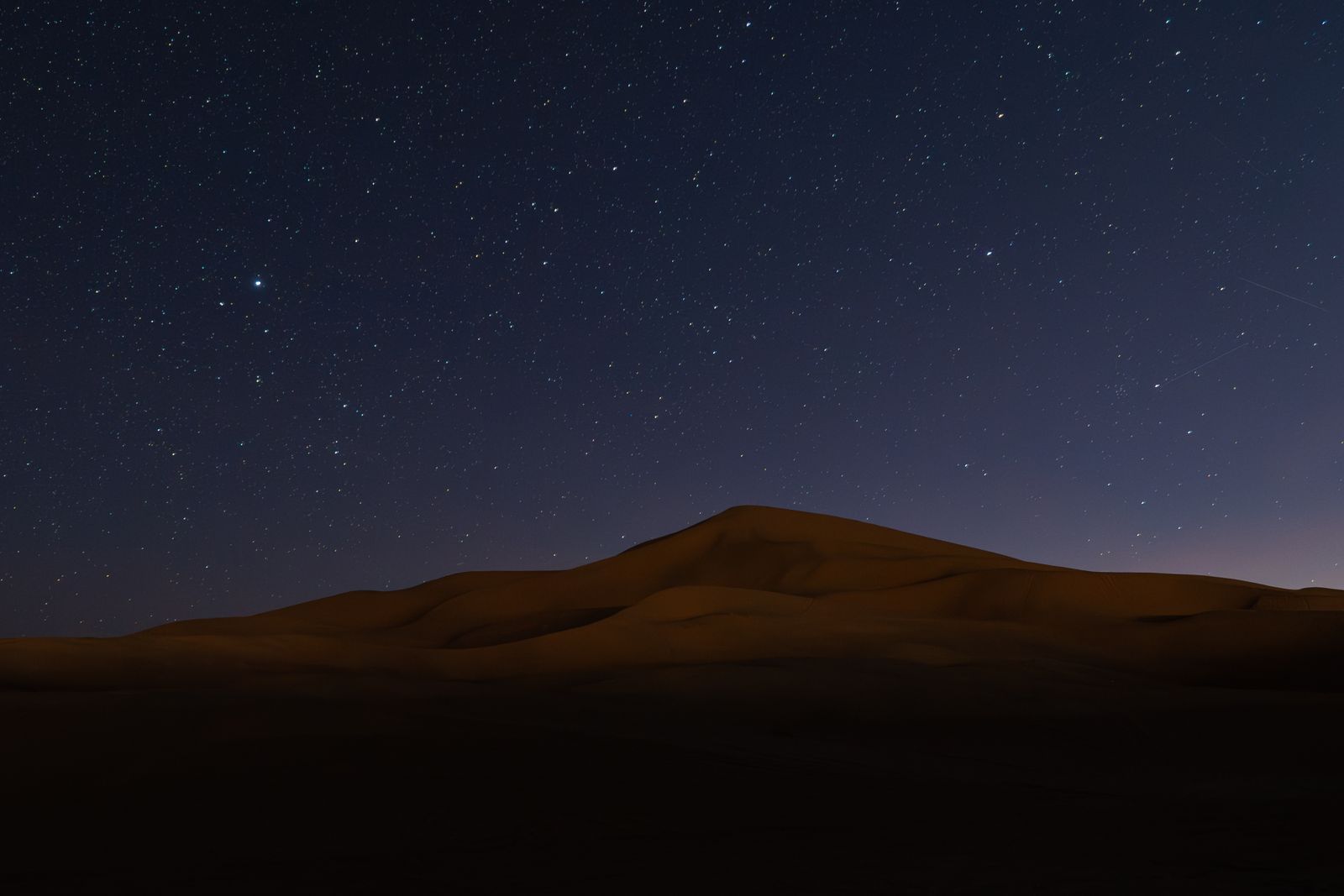
Colder than most people expect. In Merzouga, the average low is 3.5°C (38°F) in January and 4.8°C (41°F) in December. On the coldest winter nights, the temperature can get close to freezing, especially just before sunrise.
In spring and autumn, nights are fresh but comfortable: around 10°C (50°F) in March and 9–16°C (49–61°F) in November and October. In summer, even the nights stay warm, with average lows of 23–26°C (73–80°F) from June to August.
What this means at the camp:
- Our luxury tents have soft beds, thick blankets and air conditioners, so you can sleep warm in January and cool in July.
- The coldest moment is the sunrise. If you climb a dune to watch it, wear a jacket, a hat and closed shoes. The sand is cold in winter mornings.
- The campfire evening with Berber music is the warmest place in the camp after dinner, and the stars are brightest on these clear, dry nights.
What Is the Weather Like in the Sahara Desert in December?
December is one of the busiest months in Merzouga, because of Christmas and New Year, and the weather is a big part of the reason. Days are sunny and mild, around 17°C (63°F), with only about 5 mm of rain for the whole month on average. It is perfect weather for a camel ride or a 4×4 trip in the middle of the day.
The trade-off is short days and cold nights. December has the fewest hours of sunshine of the year (about 8.9 hours a day), and the average low is 4.8°C (41°F). Plan your activities between late morning and sunset, and keep the evening for dinner and the fire.
We have written more about this season in Merzouga desert camp in winter, and if you are coming for the holidays, see our New Year’s Eve in the Merzouga desert program.
Does It Rain in Merzouga?

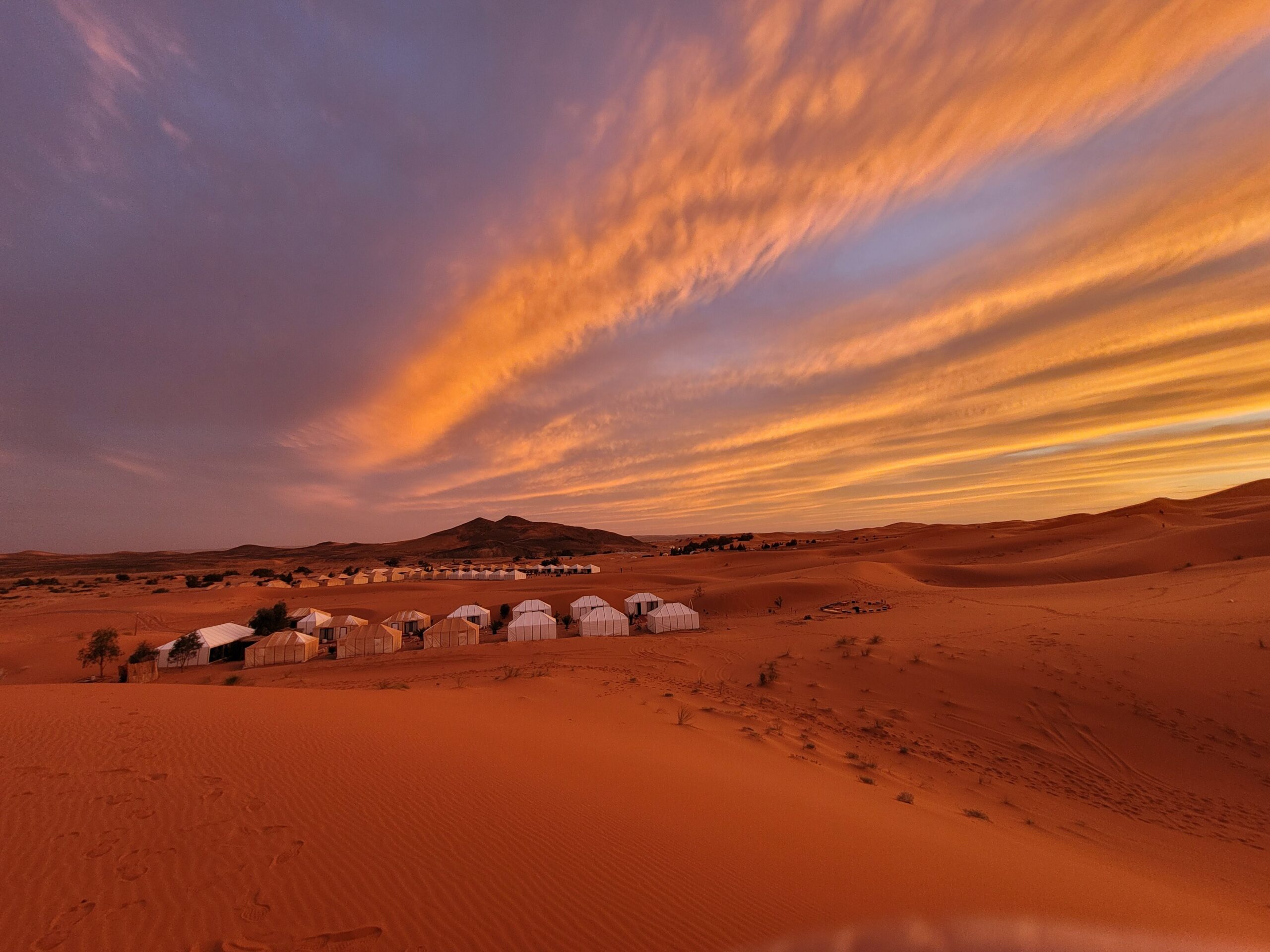
Yes, but rarely. Merzouga gets about 53 mm of rain per year on average, usually in a few short showers. The wettest months in the long-term data are October (about 8 mm) and February (about 7 mm). June and July get almost nothing.
When rain does come, it can be heavy. In autumn 2024, after exceptional storms in south-east Morocco, water came back to Lake Yasmina among the dunes and to dry areas around Merzouga. Locals said the basin had been dry for almost 20 years (Hespress / AFP report). Events like this are rare, but they show that the desert is not completely without water.
For the full story of rain, oases and hidden water in the desert, read does it rain in the Moroccan Sahara Desert?
Does It Snow in Merzouga?
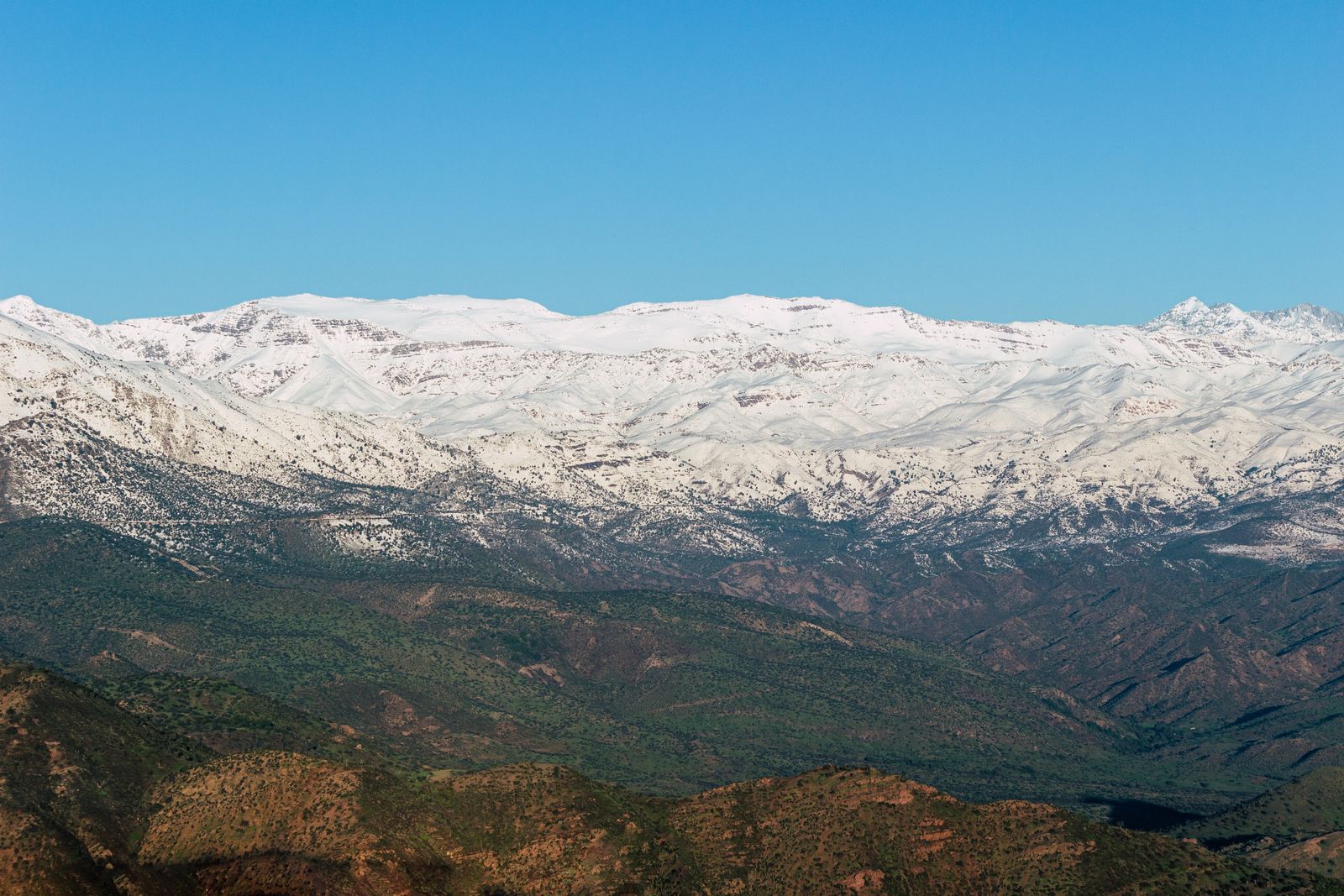
Snow in Merzouga itself is extremely rare. The air is very dry, winter brings only a few millimetres of rain, and even in January the average low stays above freezing. You should not plan a trip expecting to see snow on the dunes.
Where you may see snow is on the way. If you drive from Marrakech in winter, the road crosses the High Atlas, where the mountain passes can get snow and, on bad days, close for some hours. From Fes, the road passes through the Middle Atlas around Ifrane and Midelt, which also gets snow some winters. Check the road conditions before you leave and see our guide on how to get to Merzouga for the routes.
Sleep Well in Every Season
Comfortable tents with real beds, blankets and air conditioning, so you sleep well in every season.
Ask us for availability for your dates.
Frequently Asked Questions About the Weather in Merzouga
What is the hottest month in Merzouga?
July. The average high is about 41°C (107°F) and the average low about 26°C (80°F). August is almost as hot, with an average high of 40°C (104°F).
What is the coldest month in Merzouga?
January. Days are mild, around 17°C (62°F) on average, but the average low is 3.5°C (38°F), and some nights get close to freezing.
Is November a good time to visit Merzouga?
Yes. November has average highs of about 22°C (71°F), lows of about 9°C (49°F), around 9.4 hours of sun a day and very little rain. It is one of the most comfortable months for camel trekking and outdoor activities.
Is Merzouga too hot in summer?
It is very hot: average highs are 38–41°C from June to August. You can still visit if you plan activities at sunrise and sunset, rest in the shade at midday, drink a lot of water and choose a tent with air conditioning.
Is the air dry in Merzouga?
Very dry. Average humidity goes from about 45% in December to only 12% in July. Bring lip balm, moisturiser and a reusable water bottle, and drink regularly even if you do not feel thirsty.
Where can I check the Merzouga weather forecast?
For the next days, use a forecast service such as Yr (yr.no) or AccuWeather and search for Merzouga. Desert forecasts change quickly, so check again one or two days before you travel, and ask us if you want local advice.
The Merzouga weather is easy to summarise: almost always dry and sunny, hot in summer, mild in winter, and cool to cold at night for most of the year. Spring and autumn give the softest conditions, winter gives clear days and cold starry nights, and summer is for travellers who like heat and early mornings.
Whatever month you choose, pack for two climates: light clothes and sun protection for the day, and warm layers for the evening. Our desert camp packing list covers the details, and our desert activities page shows what you can do in each season. When you are ready, choose between our luxury desert camp and the Royal Desert Camp.