Sleeping in a Merzouga Desert Camp in Winter: What to Expect
Many travelers picture the Sahara as hot all year, so a winter stay in a Merzouga desert camp can feel like a risk. The truth is more interesting. Winter days are pleasant, the dunes are quiet, the sky is clear, and the nights are cold enough to make a warm blanket and a cup of mint tea part of the experience.
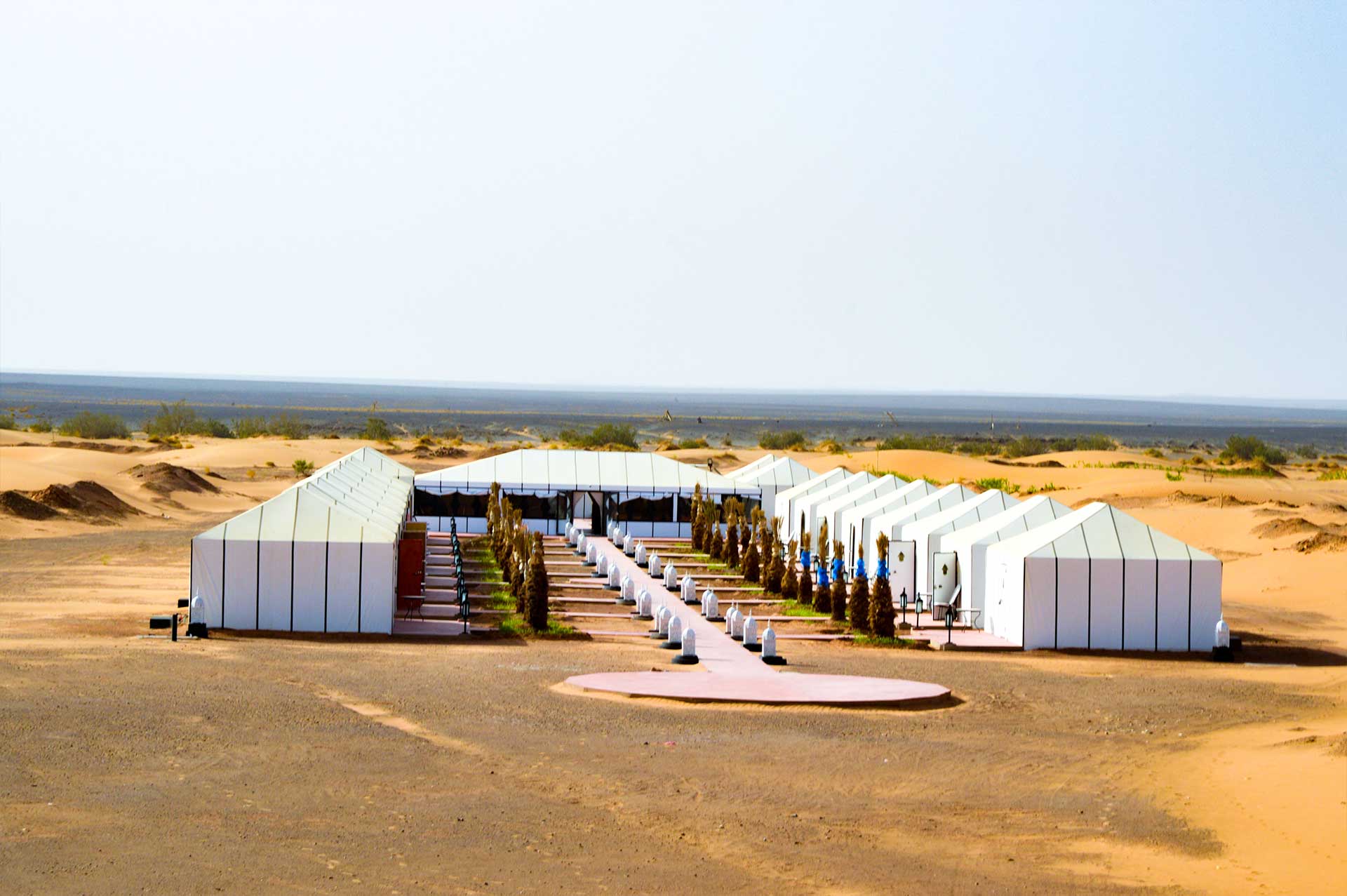
This guide explains what a winter night in the desert is really like, how cold it gets, what to pack and how to choose the right tent. If you are still comparing options, you can see our desert camp in Merzouga and the comfort level it offers in the cooler months.
Is winter a good time to visit Merzouga
Yes, for many travelers it is one of the best times. Winter runs from December to February, with the coolest weather in December and January. Daytime temperatures are comfortable for camel rides, dune walks and sightseeing, and rain is rare, so skies are usually clear.
Winter is also the quietest season. You get empty dunes, more personal attention from guides and camp staff, and often better rates than in spring. The trade-off is simple: nights are cold, so you need to prepare.
How cold is it in Merzouga in winter
Daytime temperatures in December and January are usually mild, often in the high teens Celsius, and warmer in direct sun. After sunset the desert loses heat quickly. Average night lows are around 6 to 7°C, and some nights can drop close to freezing, especially when the sky is clear and there is no wind to trap warmth.
That swing of 10 degrees or more between afternoon and night is what surprises most guests. Dry desert air makes the sun feel warm and the shade feel cool, so dress in layers from the moment you arrive.
Is it too cold to sleep in a desert camp in winter
Not necessarily! Sleeping in a desert camp during winter can be a comfortable and memorable experience if you choose the right accommodation and prepare for the cold. In the Merzouga Desert, daytime temperatures can be pleasant, but nights from December through February can become very cold, sometimes dropping close to 0°C (32°F). Comfort largely depends on the quality of the tent, the bedding provided and how well you dress for the night. A well-prepared camp with comfortable beds, thick blankets and good insulation can make a significant difference, while basic camps with thin bedding may leave you feeling cold. Before booking, ask about winter facilities, extra blankets, heating options and the type of tent available.
At Relaxing Desert Camp, you can contact our team before your arrival to confirm the available bedding and heating arrangements for your travel dates, helping you prepare properly and enjoy a more comfortable night beneath the Sahara’s starry sky.
What a winter night in a desert camp looks like
Late afternoon: arrival and camel ride
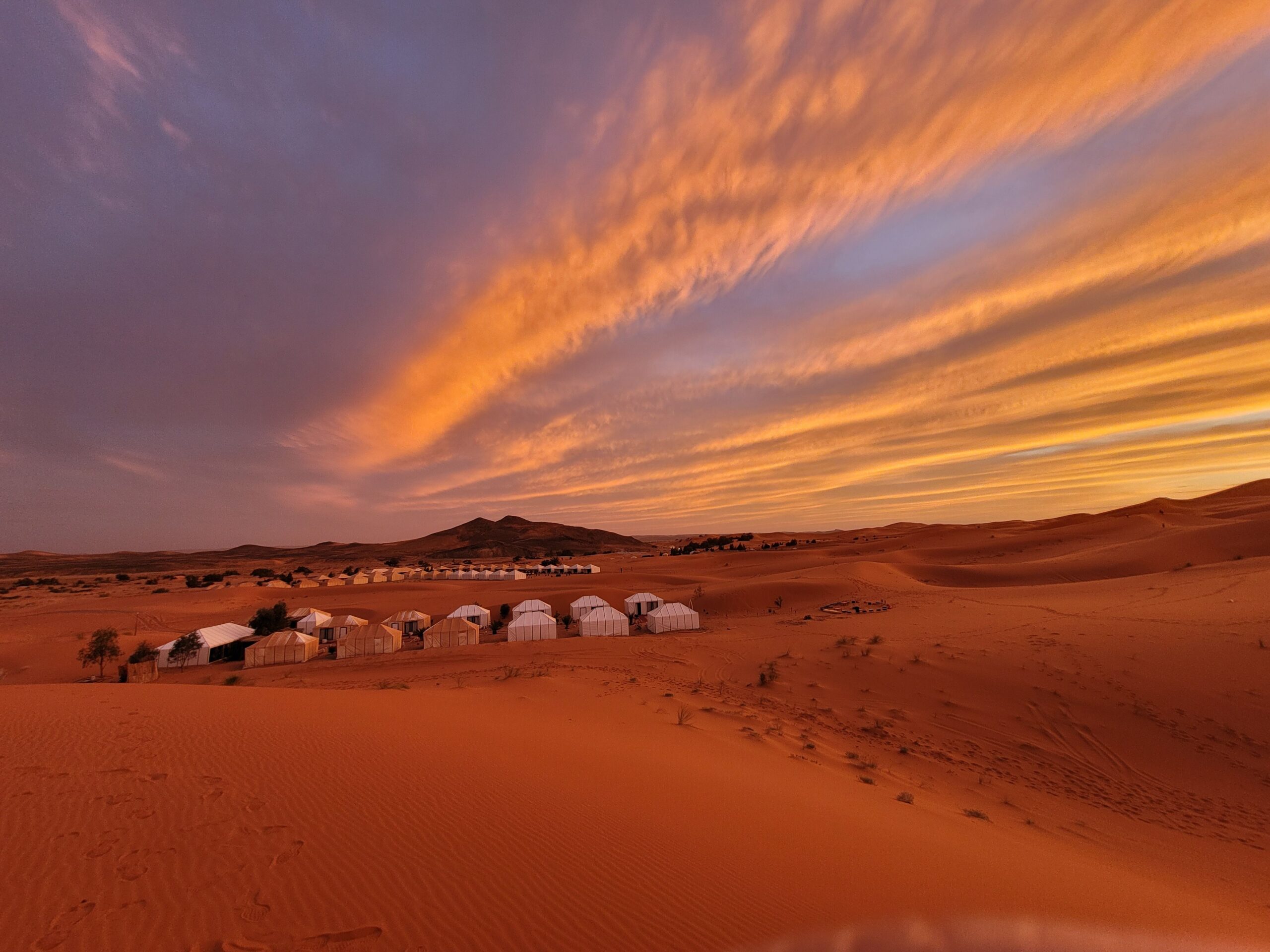
Winter sunsets come early, around 6 pm, so most guests start the camel trek in Merzouga in the mid-afternoon. The light is soft, the temperature is pleasant, and the dunes turn orange and red as the sun drops.
Sunset: wrap up before the cold arrives
Climb a dune for sunset, then put on your warm layer as soon as the sun disappears. The temperature falls quickly, and it is easier to stay warm than to warm up again.
Evening: dinner, music and fire
Dinner is served warm, usually a tagine or similar Moroccan dish, along with soup and mint tea. After dinner, guests gather around a fire or in a lounge for drums and traditional songs. Cold air makes the stars look sharper, and winter is a strong season for stargazing.
Night: sleeping in the tent
Go to bed with warm socks, a hat if needed, and plenty of blankets. A bed that is raised off the sand makes a big difference, because cold comes up from the ground. Keep your water bottle inside the tent so it does not get icy.
Early morning: sunrise
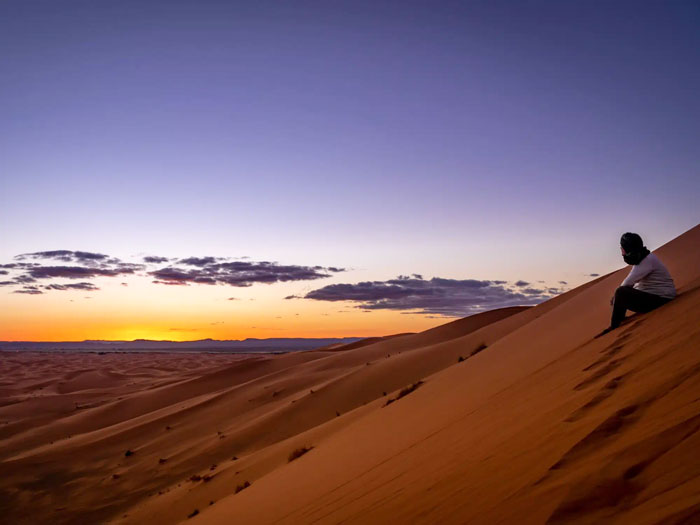
Mornings are the coldest part of the day, so dress warmly before stepping outside. Sunrise arrives around 7:30 am, and watching the first light hit the dunes with a hot drink in hand is a highlight of a winter stay.
Choosing the right tent in winter
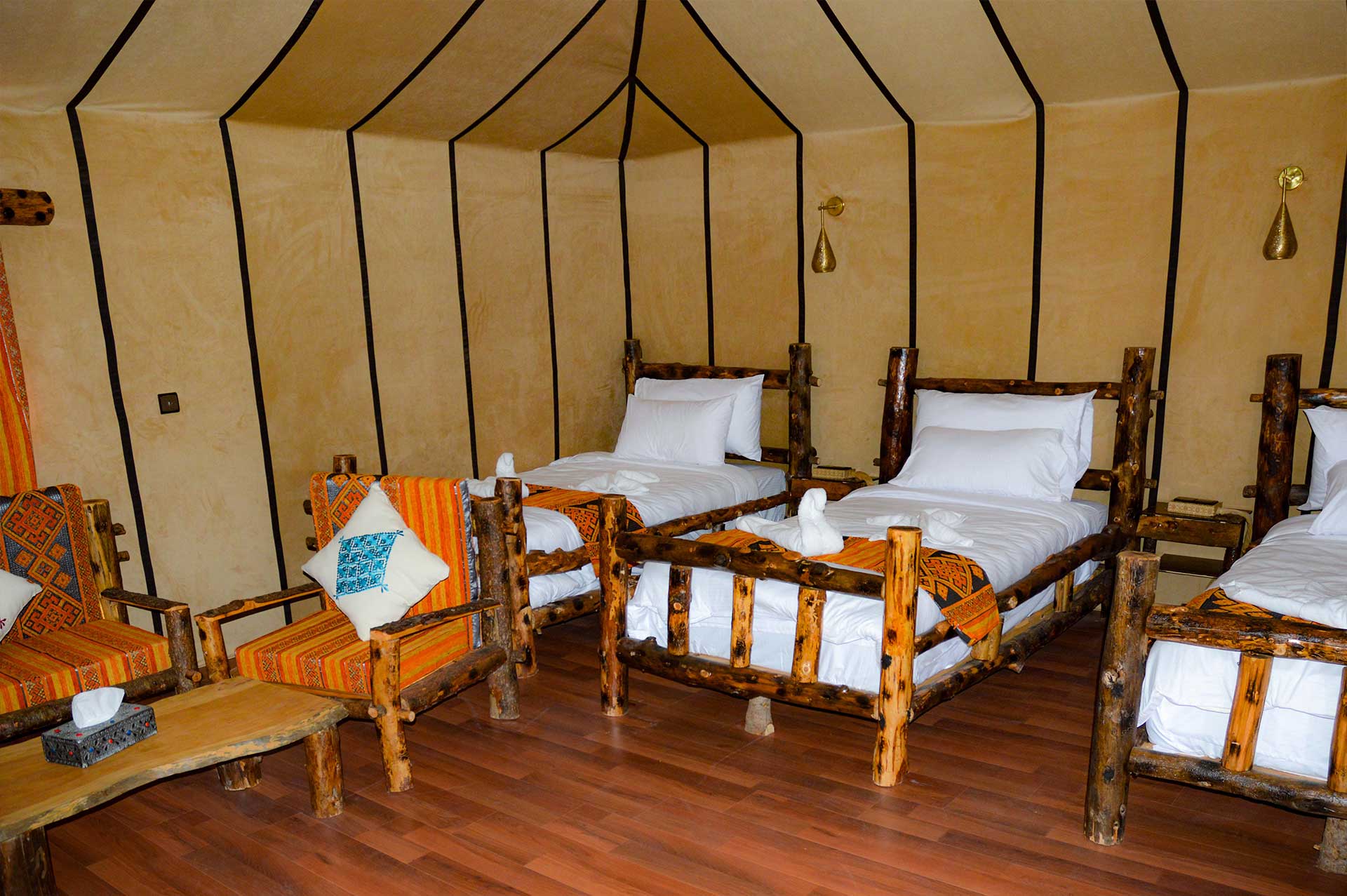
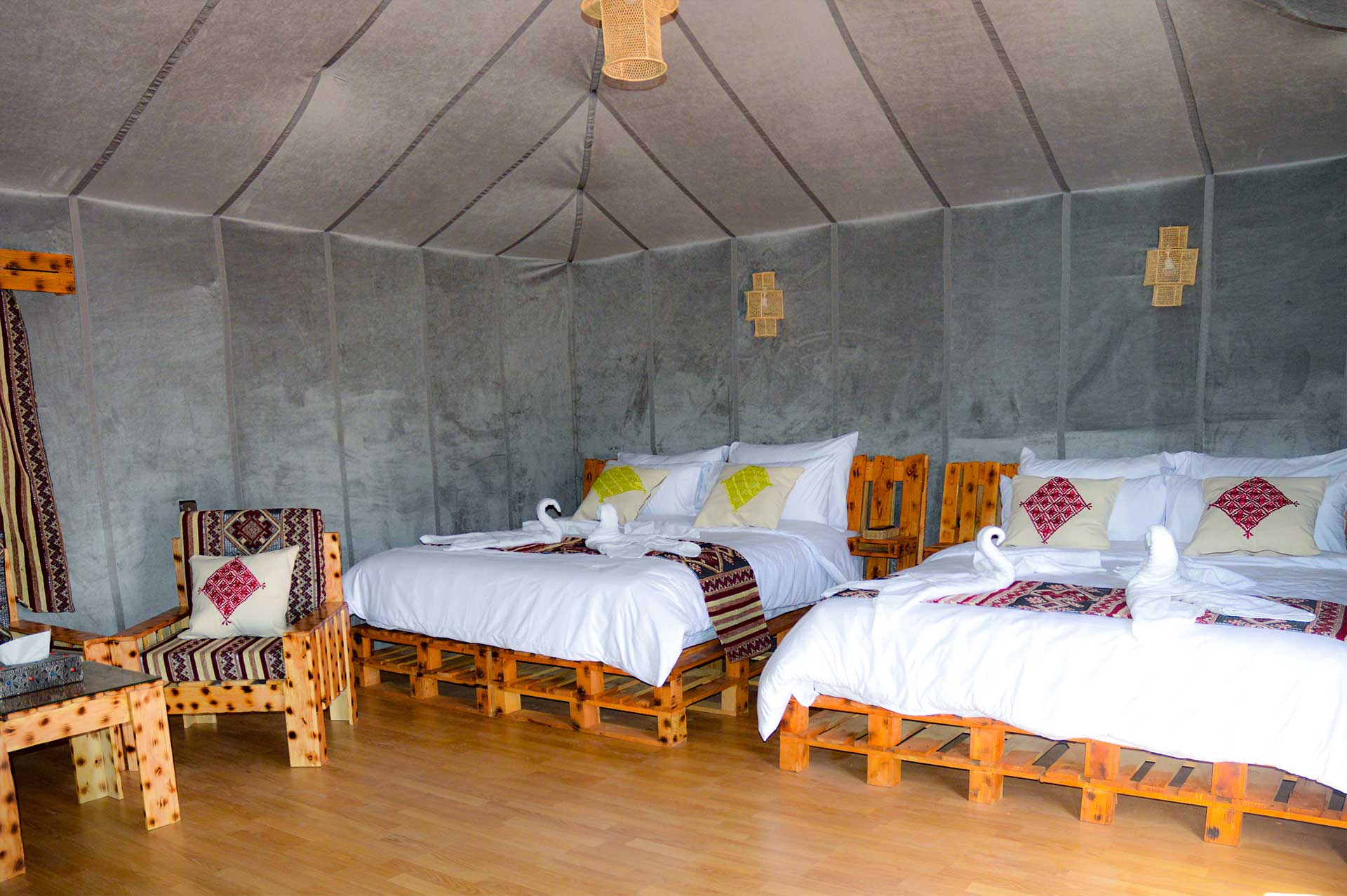
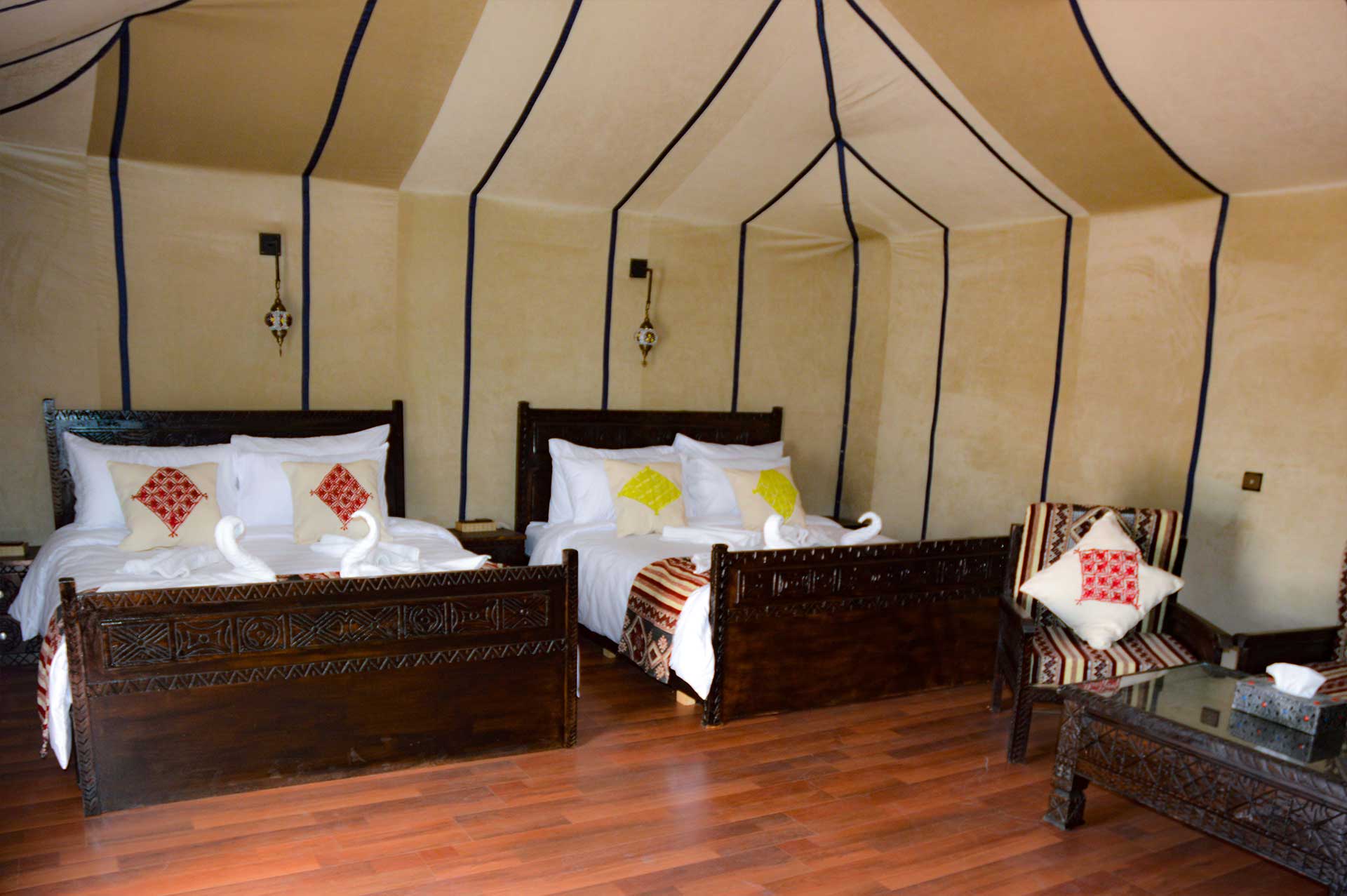

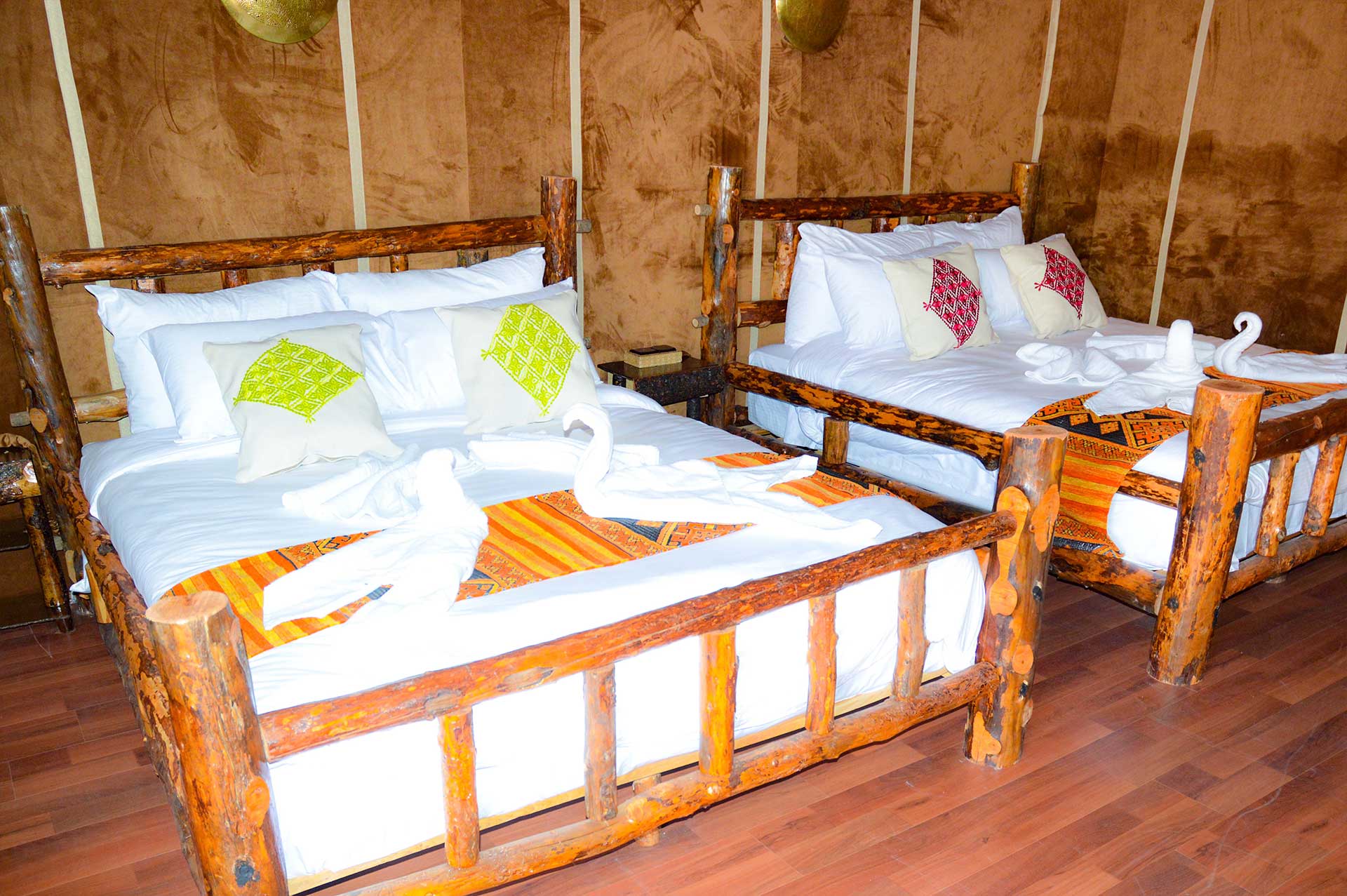
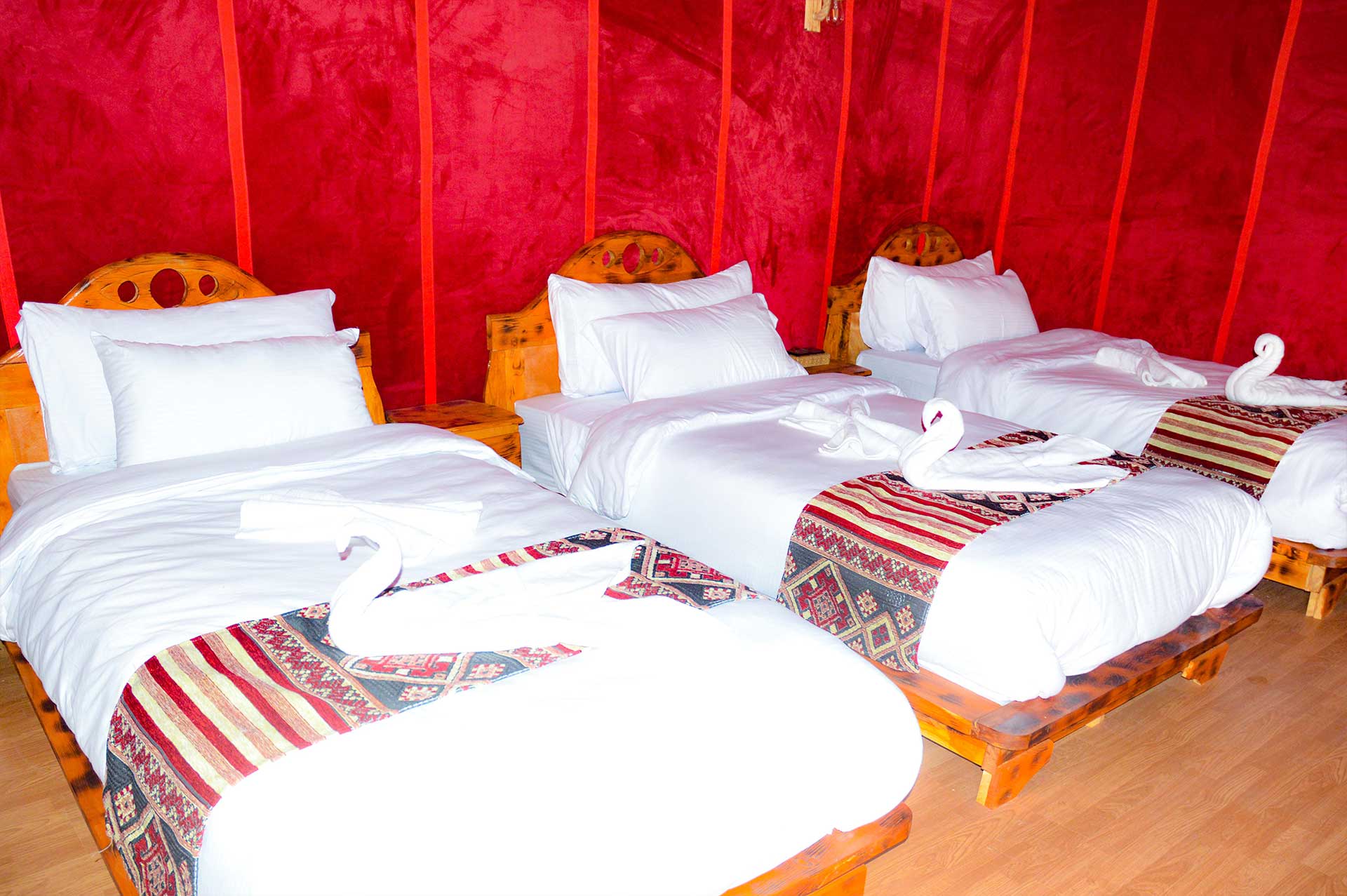
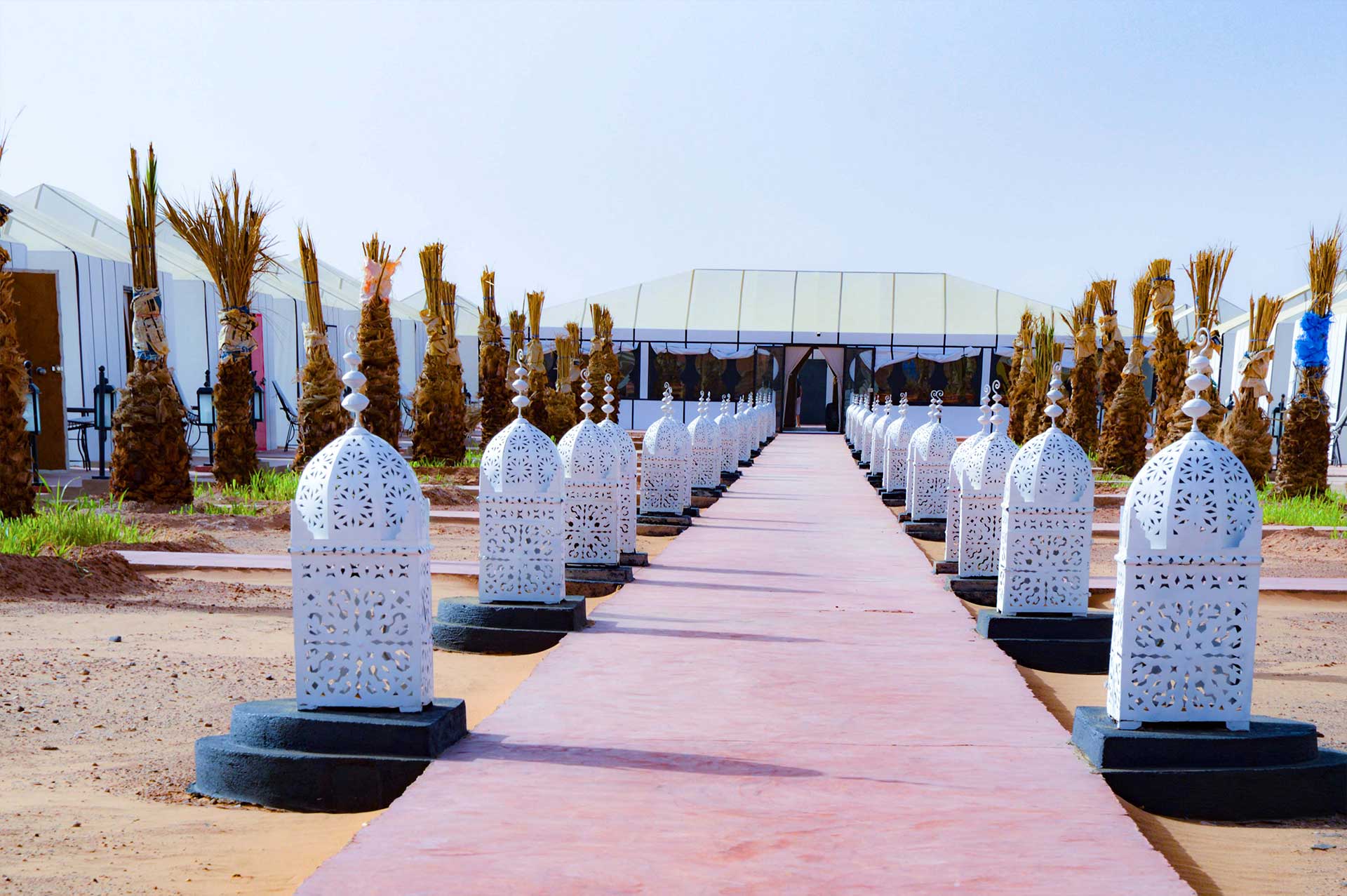
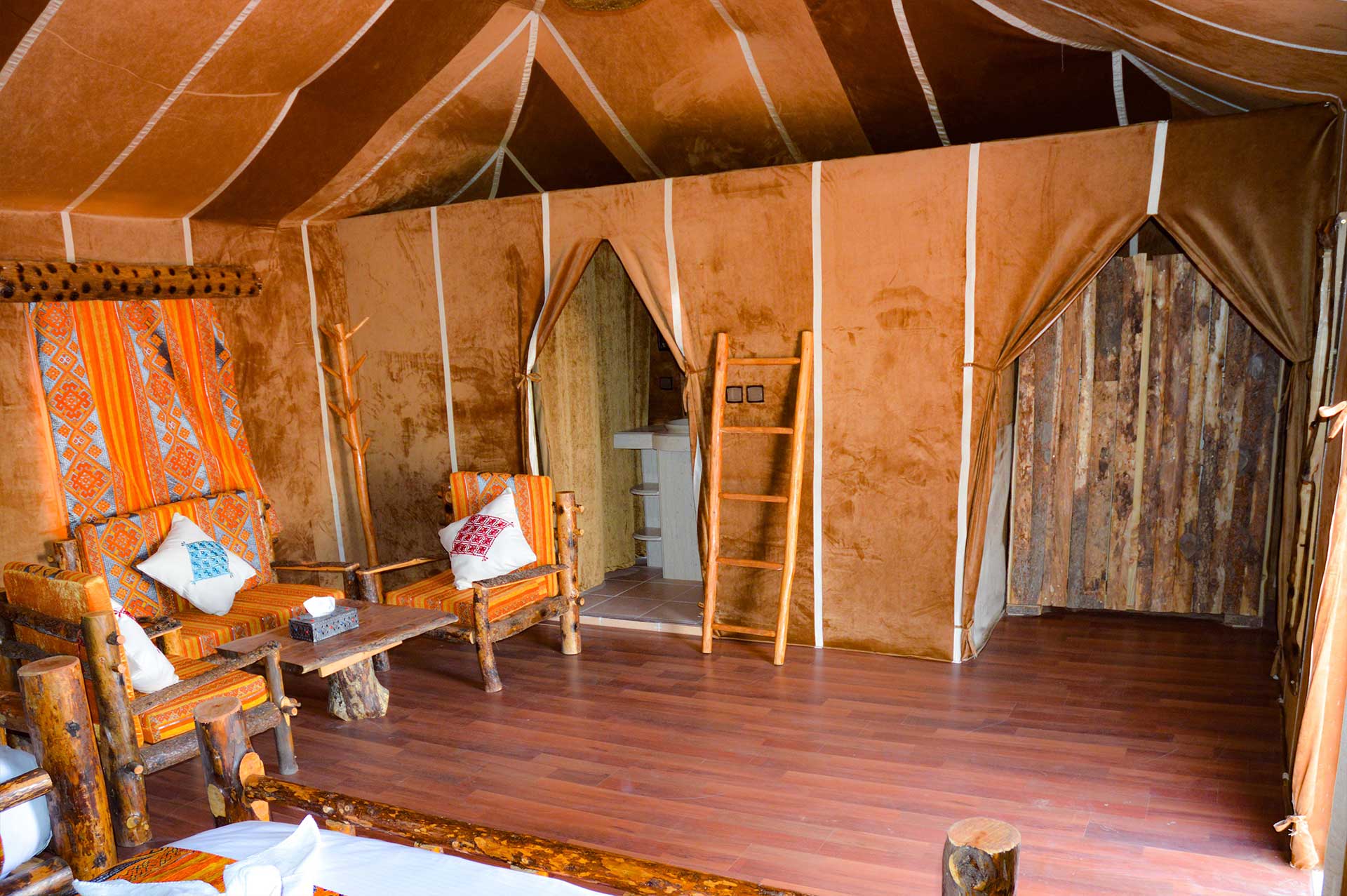
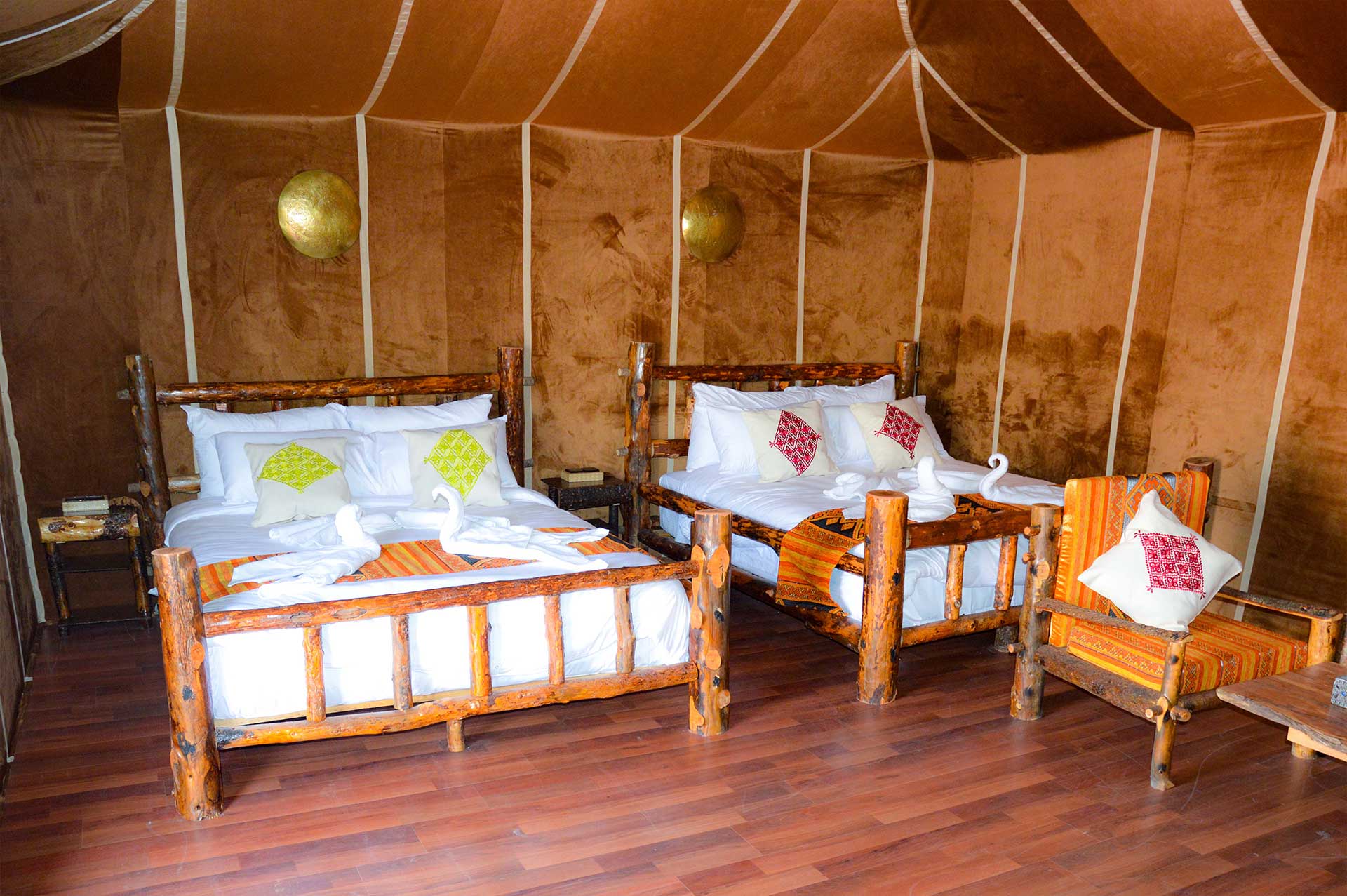
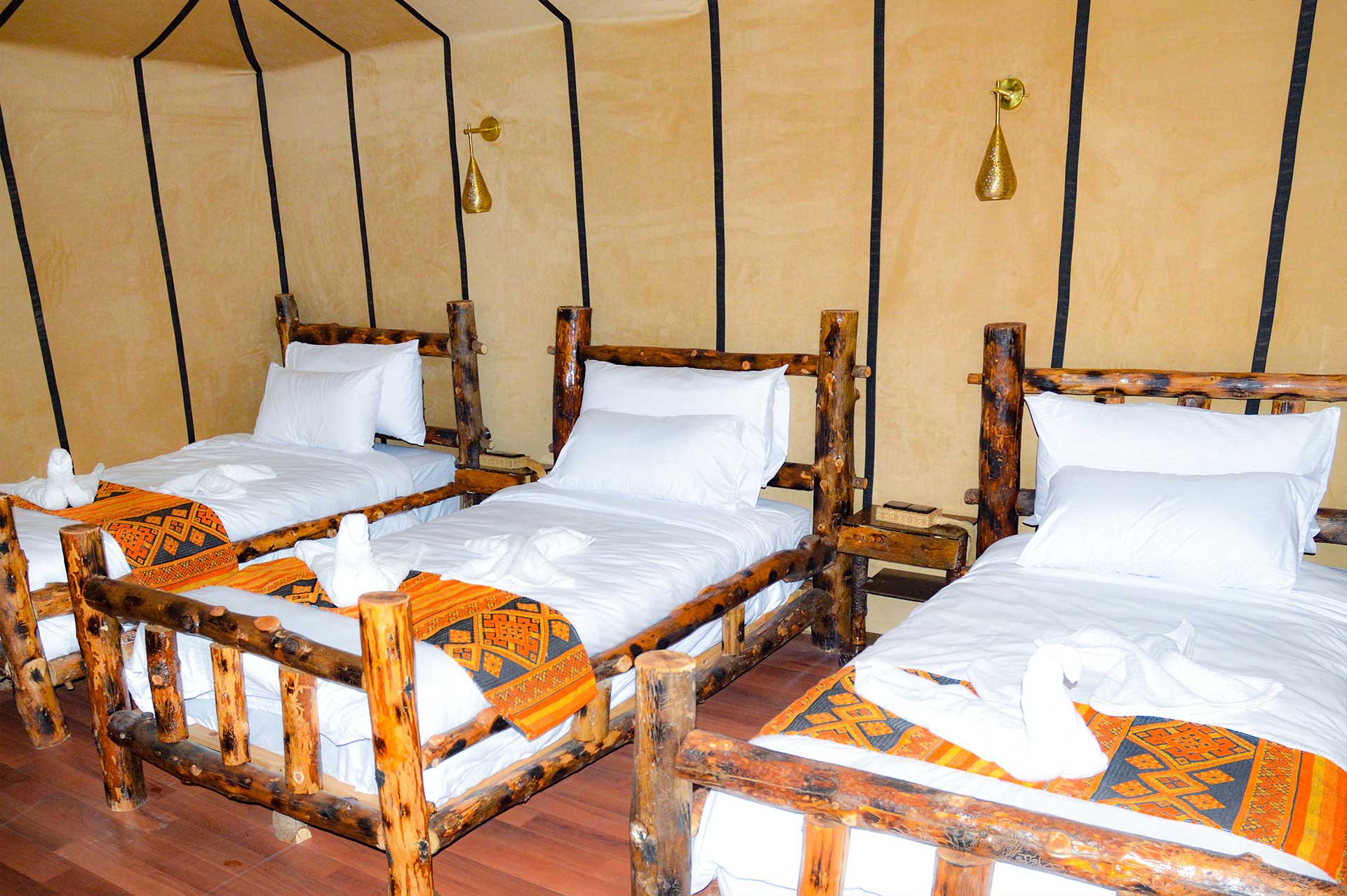
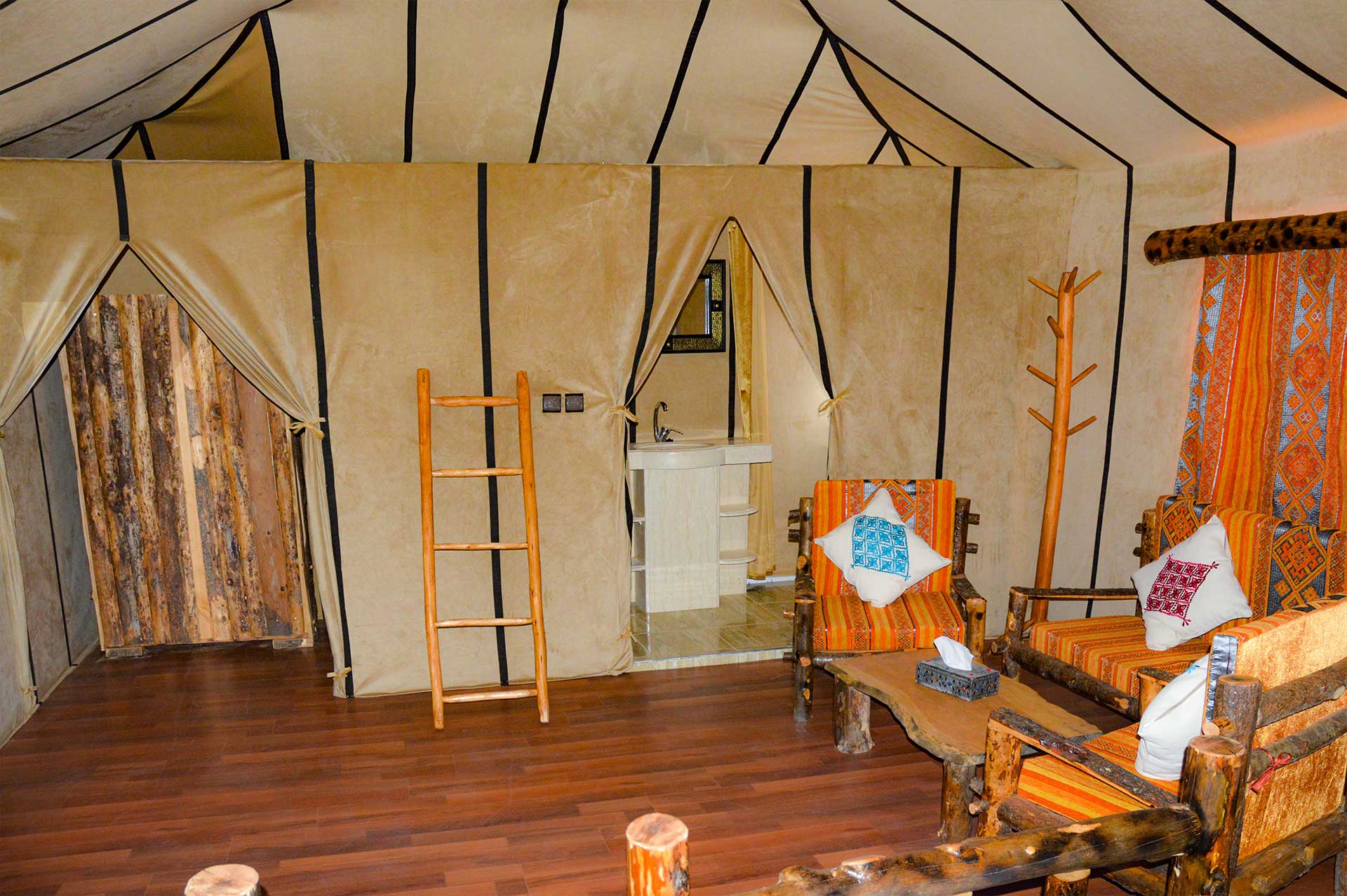
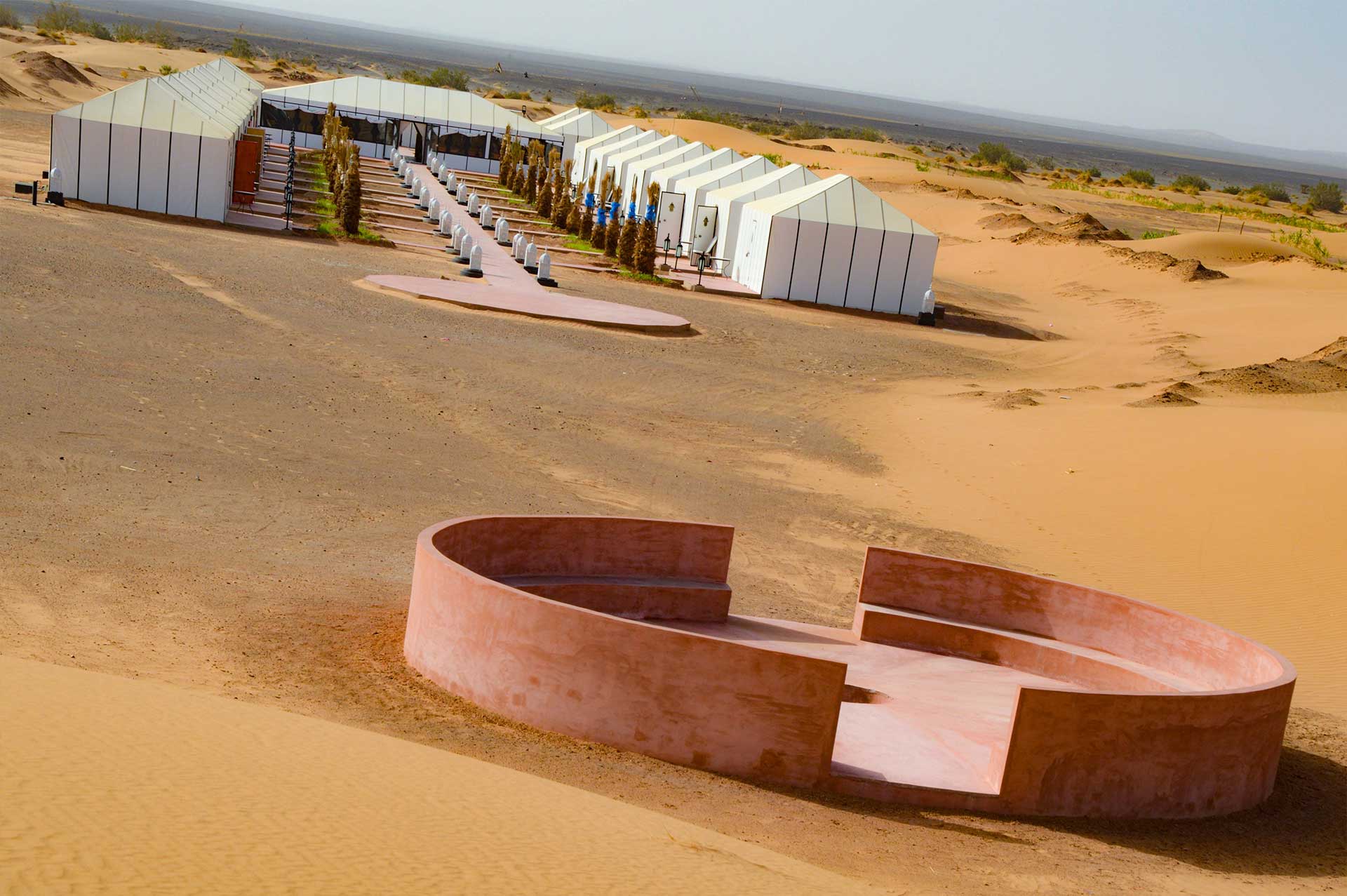
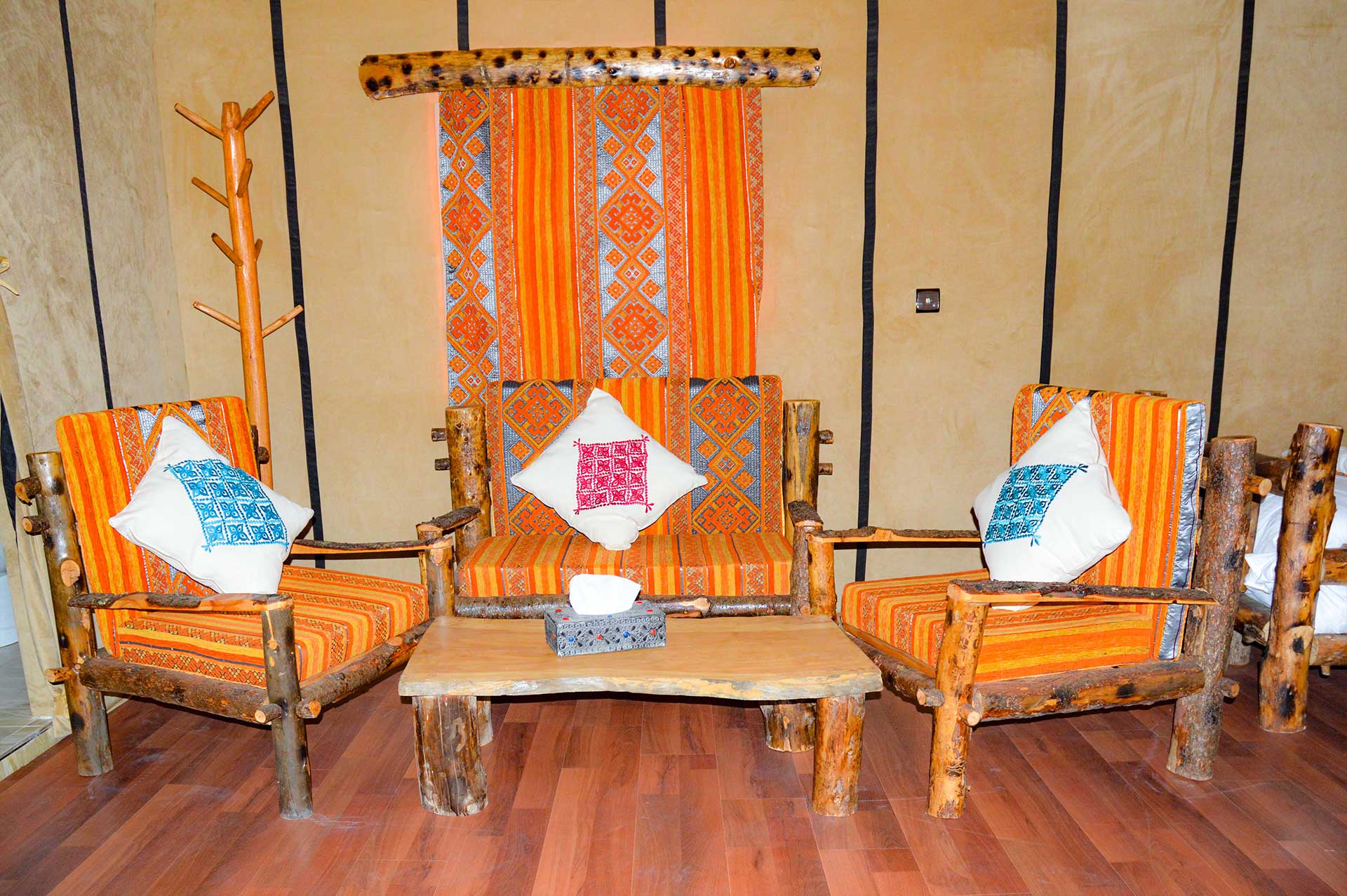
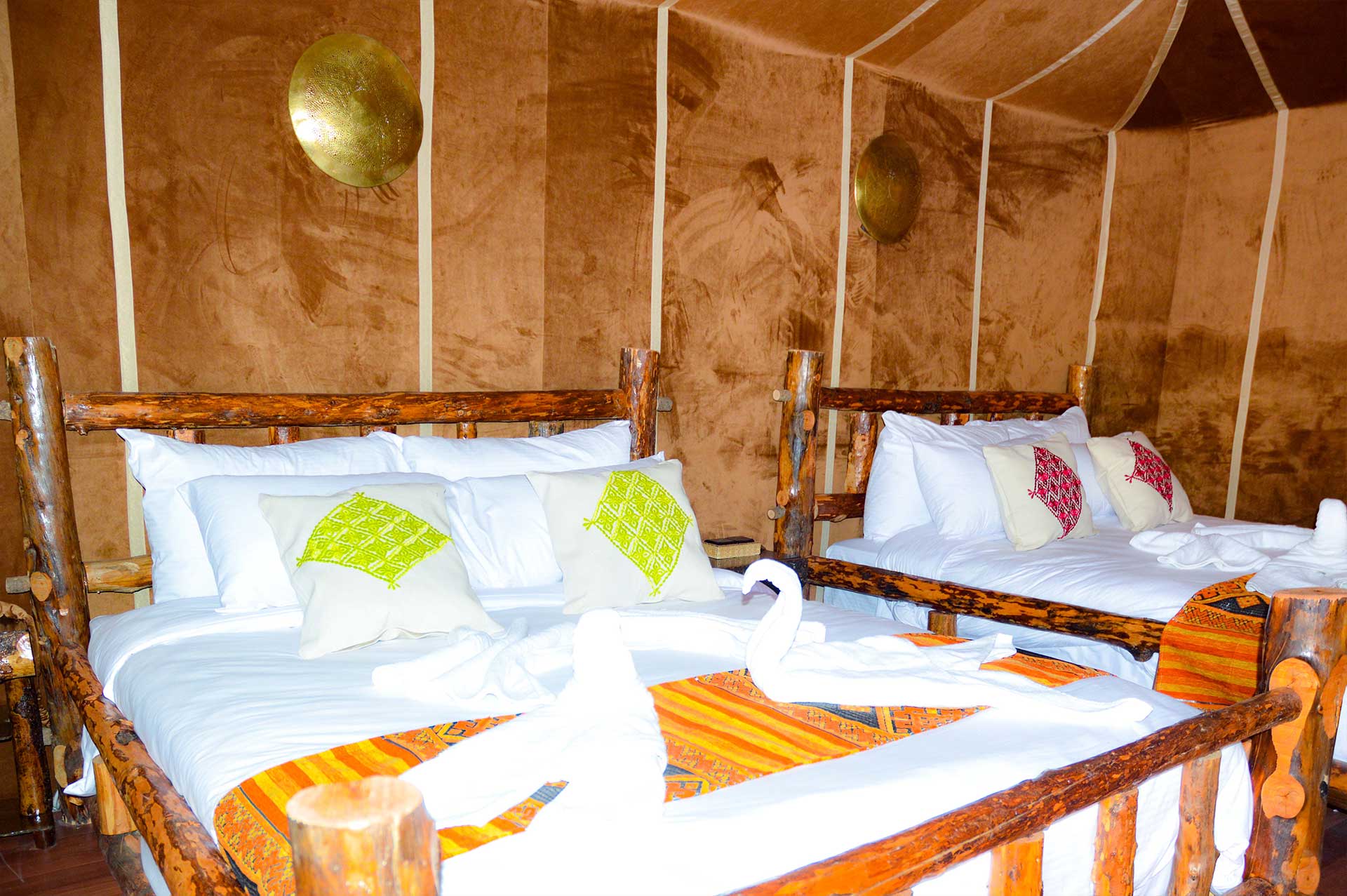
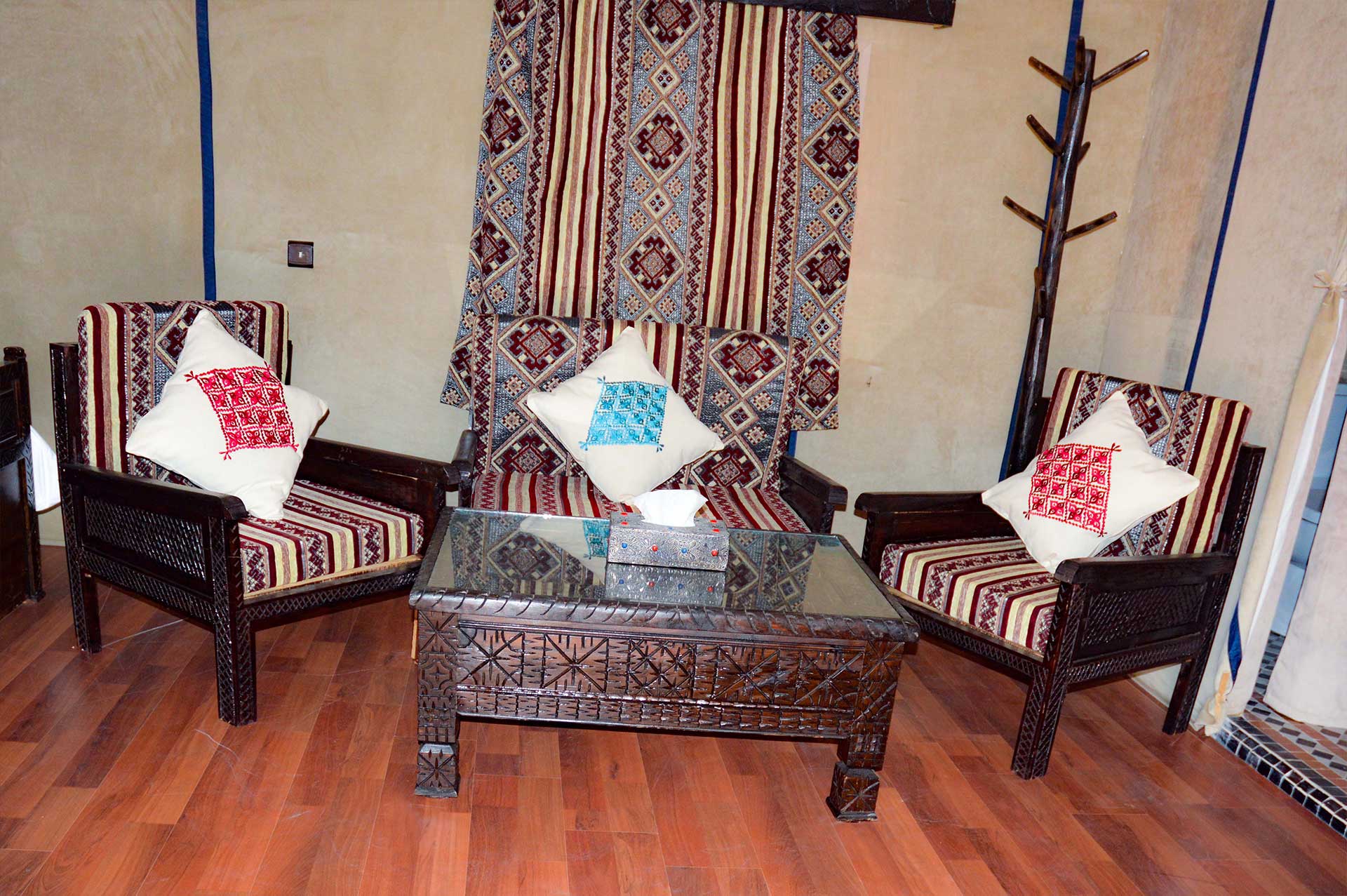
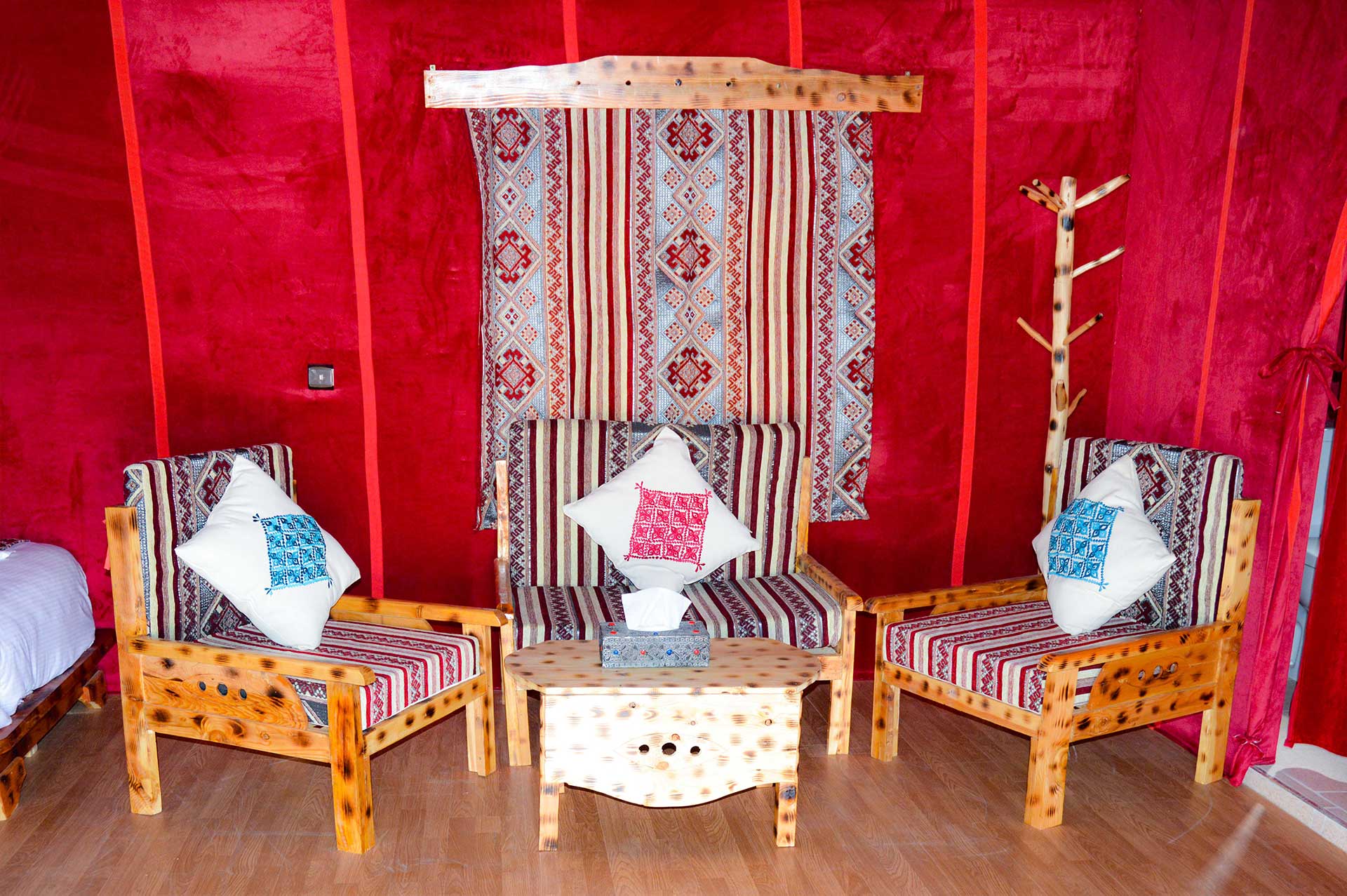
Comfort matters more in winter than in any other season. A solid tent with a proper bed, thick bedding and a private bathroom means you do not have to walk outside in the cold at night.
- Standard desert tent: a good option if you pack well and ask about extra blankets.
- Luxury tent: a better choice for most winter guests thanks to comfort, privacy and a private bathroom. See our luxury desert camp options.
- Royal Bivouac: the most comfortable choice, with canopy beds, private bathrooms and air-conditioning. Take a look at the Royal Bivouac if you want to stay warm in style.
What to pack for a winter desert camp
- Warm jacket or fleece for the evening and morning.
- Thermal base layer, which also works as warm sleepwear.
- Warm socks, plus a spare pair for sleeping.
- Hat, scarf and light gloves for sunset and sunrise.
- Comfortable closed shoes for walking in sand.
- Sunglasses, sunscreen and lip balm. The winter sun is still strong.
- A scarf or shesh for wind and dust, which you can buy locally.
- A small flashlight or headlamp for walking to the tent at night.
- A small day bag, since luggage is often left at the main property.
A good rule is to wear three thin layers instead of one thick coat. You can add or remove them as the day changes.
Book Your Merzouga Desert Camp in Winter
Enjoy a magical Sahara night with cozy accommodation, traditional Moroccan dinner, and unforgettable stargazing under the winter sky.
Benefits of visiting a Merzouga desert camp in winter
- Quiet dunes: fewer visitors means more space for photos and silence.
- Comfortable days: ideal weather for camel treks, sandboarding and walking.
- Clear skies: excellent conditions for stargazing on dry nights.
- Better value: rates and availability are often easier in the low season.
- Local culture: in mid-January, Amazigh New Year (Yennayer) is celebrated in many communities with shared meals and songs. To learn more about the people behind these traditions, read our guide to Amazigh women of Morocco.
Things to consider before booking
- Daylight is shorter, so plan to arrive early enough for the camel ride.
- Wind can make the evening feel colder, so keep a windproof layer ready.
- Rain is rare but possible, and plans can change, so stay flexible.
- If you are traveling with children or older guests, choose a more comfortable tent and bring extra layers.
- Road conditions in the Atlas can be affected by snow in mid-winter, so check the route before you travel.
Combine your winter desert stay with the Dades Gorge
Winter is a good season for a longer route. After a night in the dunes, you can drive back toward the mountains and spend a day in the red cliffs of the Dades Valley. Our Dades Gorge travel guide explains how to plan the route, and we can help you build a trip that connects the gorge and the Sahara. Contact us to organize it.
Frequently asked questions about Merzouga desert camp in winter
How cold is the Sahara at night in winter
Average night lows in Merzouga in December and January are around 6 to 7°C, and nights can drop close to freezing. Days are much warmer, so layers are the best strategy.
Will I be cold sleeping in a desert tent in winter
You can sleep comfortably with thick blankets, warm clothes and a well-built tent. Always confirm bedding and heating with your camp before you arrive.
Is December a good month for the Sahara
Yes. December has pleasant days, clear skies and very little rain, and it is one of the quieter months in Merzouga.
What should I wear for a desert camp in winter
Wear layers, with a warm jacket, thermal underlayer, warm socks, a hat and closed shoes. Keep a windproof layer for sunset and morning.
Can I do a camel ride in winter
Yes. Winter is a comfortable season for camel treks because the afternoon heat is gone. Dress warmly for the return after sunset.
A winter night in a Merzouga desert camp is quieter, clearer and more atmospheric than many people expect. With the right tent, warm clothes and a good plan, the cold becomes part of the charm. When you are ready, book your stay at Relaxing Desert Camp and spend a winter night under the stars.