
The Fossils of the Sahara in Morocco: Were There Dinosaurs?
The vast and seemingly barren Moroccan Sahara is one of the most surprising places on Earth for fossil discoveries. Beneath the endless dunes and rocky landscapes lie the remnants of an ancient world teeming with life. From massive prehistoric sea creatures to dinosaurs, Morocco’s unparalleled fossil record tells the story of a vastly different past.
The Fossils of the Sahara in Morocco and an Ancient Ocean
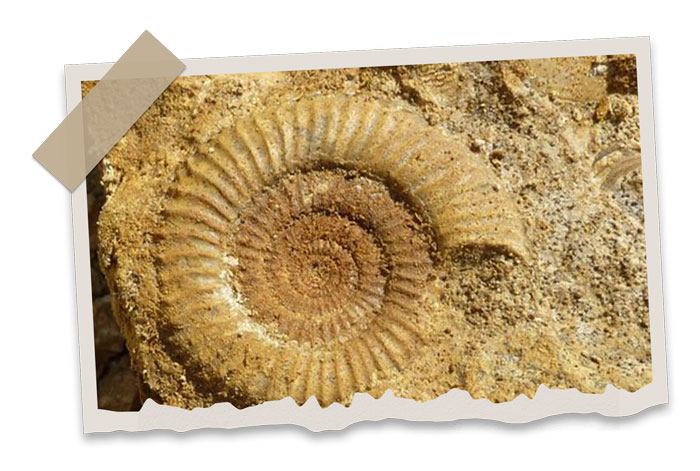
Long before it became a desert, the Moroccan Sahara was once a lush, green land covered by a vast inland sea. This was during the Paleozoic and Mesozoic eras, between 500 and 100 million years ago. Fossil evidence shows that during this period, the region was home to a rich diversity of marine life, including ammonites, trilobites, and gigantic sea reptiles such as plesiosaurs and mosasaurs. These creatures thrived in the warm, shallow waters that once covered much of North Africa.
One of the most significant fossil discoveries in Morocco is that of the Spinosaurus, a massive, sail-backed dinosaur that was semi-aquatic. Found in the Kem Kem Beds of southeastern Morocco, this unique predator lived around 95 million years ago and is believed to have hunted in rivers and coastal lagoons. Fossilized remains of Spinosaurus provide crucial insights into the adaptations of dinosaurs to aquatic environments, challenging previous assumptions that all large theropods were purely land-based hunters.
Did The Fossils of the Sahara in Morocco Include Dinosaurs?
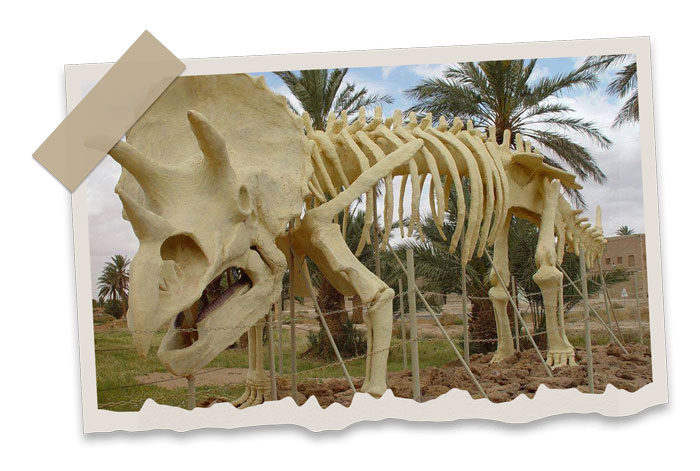
Yes! Morocco is one of the richest dinosaur fossil sites in the world. The country’s Cretaceous-era formations have revealed an impressive variety of dinosaur species, including the giant Spinosaurus, one of the largest predatory dinosaurs to have ever lived. Unlike most large theropods, Spinosaurus was semi-aquatic and likely hunted fish in prehistoric rivers and coastal lagoons. Other notable dinosaurs from Morocco include Carcharodontosaurus, a massive carnivore similar to T. rex, and Deltadromeus, a swift, agile predator. These discoveries have reshaped our understanding of the diversity and ecology of dinosaurs in North Africa.
The Fossil-Rich Regions of Morocco
Morocco is home to some of the most diverse and well-preserved fossil sites in the world. Key fossil-rich regions include:
- The Kem Kem Beds: Located near the southeastern border of Morocco, these fossil deposits have yielded some of the most remarkable dinosaur discoveries, including Spinosaurus, Carcharodontosaurus, and Deltadromeus. The region was once a lush river system teeming with prehistoric life.
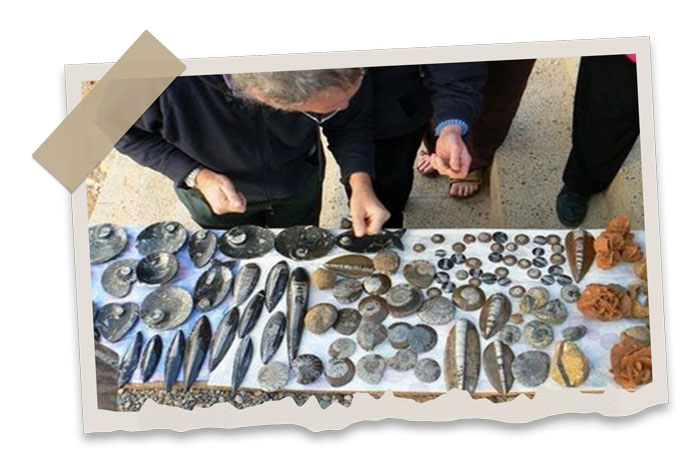
- The Atlas Mountains: These mountains contain abundant fossilized marine creatures, including trilobites, orthoceras, and ammonites. The Middle Atlas region, particularly around Erfoud and Rissani, is famous for its stunning black limestone slabs filled with well-preserved fossils.
- Erfoud and the Fossil Capital of Morocco: This town is renowned for its fossil industry, where skilled artisans extract, polish, and sell beautifully preserved fossils of marine creatures that lived hundreds of millions of years ago.
- The Anti-Atlas Mountains: Known for their rich deposits of Devonian and Ordovician fossils, this region produces a wide variety of trilobites, some of the best-preserved specimens in the world.
Discover Morocco's Sahara Fossil
Step back in time and discover Morocco’s Fossil Treasures hidden beneath the golden sands of the Sahara! From prehistoric trilobites to massive ammonites, explore the remnants of an ancient ocean that once covered the desert. Visit Erfoud, the fossil capital, and witness skilled artisans transform these ancient relics into stunning works of art.
Fossils and Human Evolution in Morocco
Morocco has also played a crucial role in the study of early human evolution. In 2017, researchers discovered the oldest known Homo sapiens fossils at Jebel Irhoud, dating back around 300,000 years. This groundbreaking find rewrote the history of human evolution, suggesting that modern humans emerged much earlier than previously believed and in a broader geographical range.
The Importance of Fossil Discoveries
The fossils found in Morocco are more than just relics of the past—they are windows into Earth’s ancient ecosystems and evolutionary history. They help paleontologists understand how climate changes have shaped life on our planet over millions of years. Furthermore, these discoveries have economic and scientific value, with many fossils displayed in museums worldwide and used in academic research.
Ethical Considerations and Fossil Conservation
While fossil collecting is an exciting endeavor, it is crucial to ensure ethical practices in fossil excavation. Morocco has a thriving fossil trade, but concerns have been raised about the illegal removal and sale of fossils. Governments and conservationists are working to protect these fossils, promoting responsible tourism and scientific exploration to preserve these treasures for future generations.
Frequently Asked Questions About Fossils in the Sahara of Morocco
Are there really dinosaur fossils in the Sahara Desert of Morocco?
Yes. Southeastern Morocco is internationally known for important dinosaur fossil discoveries, particularly in the Kem Kem Beds. Fossils from this region include Spinosaurus, Carcharodontosaurus, and Deltadromeus, among other prehistoric animals. The area was very different millions of years ago, with extensive river systems and aquatic environments rather than the desert landscape seen today.
Where can you find fossils in Morocco?
Some of Morocco’s most famous fossil-rich areas are in the southeast, including the Kem Kem region, Erfoud, Rissani, and parts of the Anti-Atlas. Erfoud is particularly well known for its fossil industry, where fossil-bearing rocks are collected, prepared, polished, and sold as specimens and decorative objects. Other regions of Morocco also contain important marine and prehistoric fossils.
What dinosaurs have been found in Morocco?
Several important dinosaurs have been discovered in Morocco, including Spinosaurus, Carcharodontosaurus, and Deltadromeus. The Kem Kem Beds are especially significant because they preserve evidence of a diverse Late Cretaceous ecosystem that included large predatory dinosaurs, fish, crocodile relatives, and other prehistoric animals.
Why are there fossils in the Sahara Desert?
The Sahara was not always a desert. Over geological time, parts of present-day Morocco were covered by ancient seas, rivers, wetlands, and other environments that supported abundant life. When organisms died, their remains could become buried in sediments and eventually fossilized. Geological changes and erosion later exposed these fossil-bearing rocks, allowing scientists and collectors to discover them in areas that are now part of the Sahara.
Can you see or buy fossils in Morocco?
Yes. Erfoud is one of the best-known places in Morocco to see and purchase fossils. Local workshops display and process fossil-bearing stone, including ammonites, trilobites, orthoceras and other marine fossils. If you plan to buy a valuable specimen, ask about its origin, whether it has been repaired or restored, and what documentation may be required to export it from Morocco.
Are fossils from Morocco real?
Many fossils sold in Morocco are genuine, but the commercial market can also include repaired, restored, reconstructed, composite, or replica specimens. This is particularly important when purchasing expensive pieces. Buyers should ask the seller about the fossil’s condition and provenance rather than assuming that every specimen is completely natural.
Was the Sahara Desert once covered by an ocean?
Parts of what is now Morocco were covered by ancient marine environments at different points in geological history. This helps explain the abundance of marine fossils found across several regions of the country. However, the geological history of Morocco is complex, and different fossil deposits represent different environments and periods rather than one single ocean covering the entire modern Sahara at the same time.
Can tourists collect fossils in Morocco?
Travelers should not assume that they can freely collect fossils wherever they find them. Rules can vary according to the location, land ownership, protected status, and the type of specimen involved. If you are interested in fossil collecting, it is safer to work with a reputable local guide or established fossil operation and check the relevant regulations before removing or exporting specimens.
The Moroccan Sahara is more than a land of sand and dunes—it is a prehistoric treasure trove, rich with fossils that tell the story of ancient oceans, dinosaurs, and early human ancestors. As research and exploration continue, the region is bound to reveal even more fascinating insights into Earth’s distant past. Whether you are a paleontology enthusiast or an adventurer, the fossils of Morocco offer a glimpse into a time when this desert was teeming with life, proving that history lies just beneath the surface, waiting to be uncovered.