
Dadès Gorge Road: The Ultimate Scenic Drive in Morocco
If you are looking for one of the most spectacular road trips in southern Morocco, the Dadès Gorge should be high on your list. The road climbs from the Dadès Valley into a dramatic landscape of red and ochre cliffs, green river terraces, traditional villages, kasbahs, and striking rock formations before reaching the famous series of mountain switchbacks.
What makes the Dadès Gorge road special is that the journey itself is the attraction. You do not simply drive to a viewpoint and leave. As the road follows the Dadès River, the landscape changes constantly, from broad agricultural valleys and palm-filled areas to narrow canyons and steep mountain walls. The route is particularly famous for its dramatic hairpin bends, which have become one of the most recognizable road-trip scenes in Morocco.
Whether you are driving from Marrakech toward the Sahara Desert, planning a Morocco road trip, or simply looking for an unforgettable scenic drive, this guide explains what to expect on the Dadès Gorge road, where to stop, when to go, and how to make the most of the journey.
What Makes the Dadès Gorge Road Special?
The Dadès Gorge road is more than a mountain road connecting one destination to another. It takes you through one of Morocco’s most visually diverse landscapes, where dramatic geology and traditional rural life exist side by side.
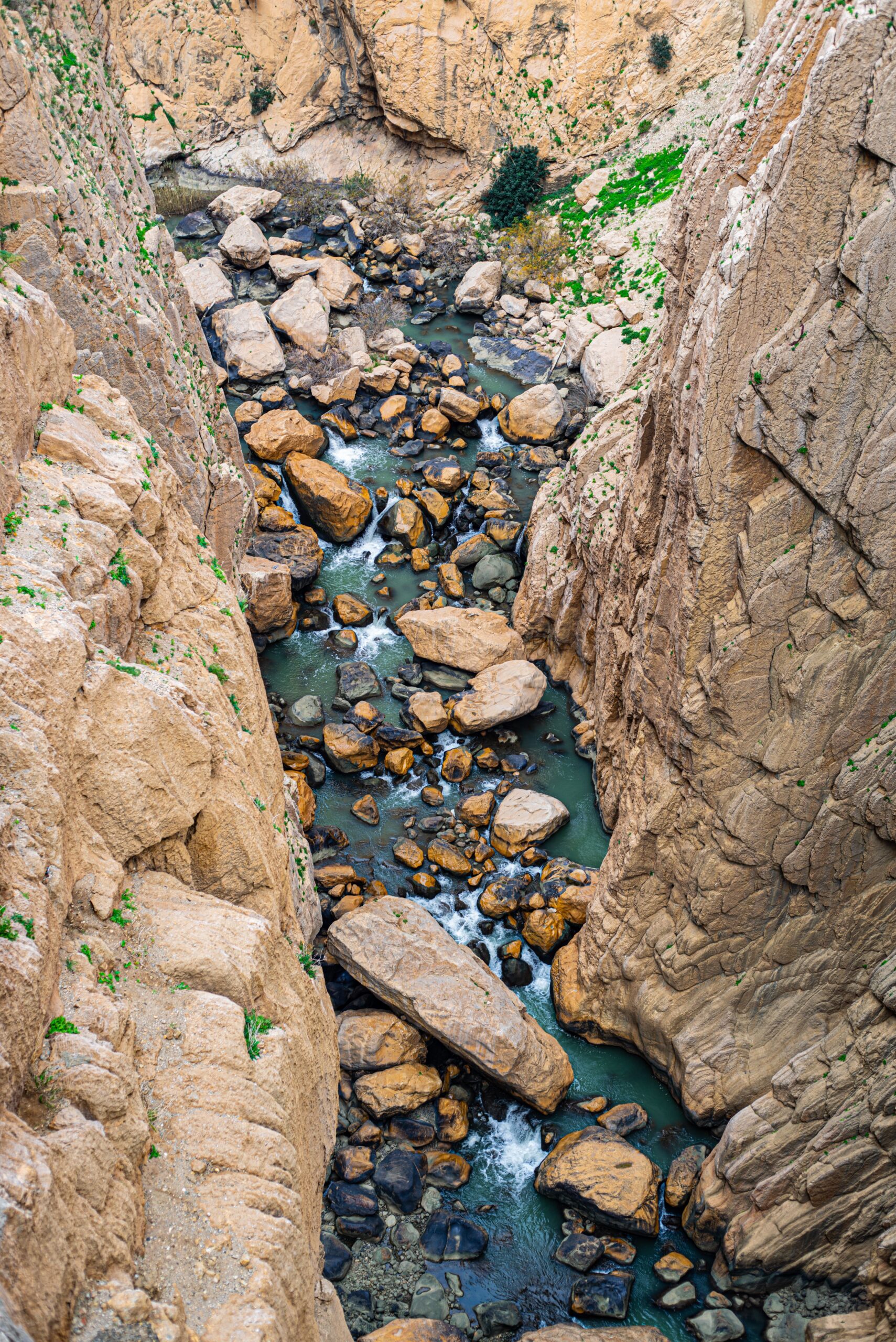
The route follows the Dadès Valley and eventually enters the gorge, where the valley becomes narrower and the surrounding cliffs become more imposing. Along the way, you can see red-rock formations, cultivated fields, palm groves, traditional earthen buildings, and small villages scattered across the valley.
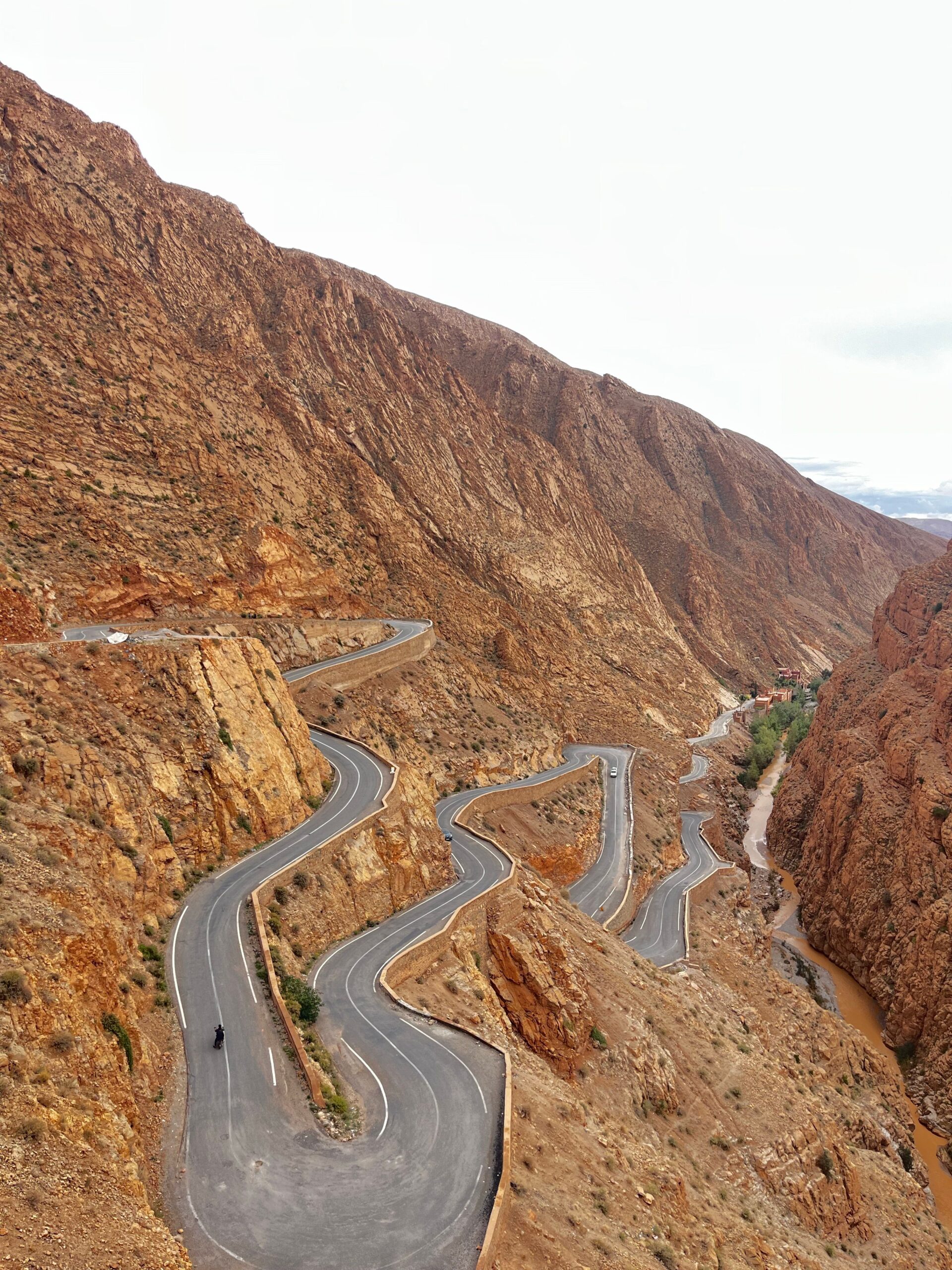
The most famous section is the zigzag road near the upper gorge, where several tight hairpin bends climb the mountainside. From above, the road appears to fold back on itself against the enormous rocky landscape, creating the classic photograph associated with the Dadès Gorge.
This combination of dramatic scenery, winding roads, and authentic rural landscapes is what makes driving through Dadès one of the highlights of southern Morocco.
READY TO DISCOVER THE FAMOUS DADÈS GORGE ROAD?
Experience the winding mountain roads, red-rock cliffs, traditional villages, and breathtaking landscapes of southern Morocco with a journey designed around you.
Where Is the Dadès Gorge Road?
The Dadès Gorge is located in southeastern Morocco, in the Drâa-Tafilalet region. The main gateway to the valley is Boumalne Dadès, a town situated along the N10 between Ouarzazate and Tinghir.
From Boumalne Dadès, travelers follow the regional R704 into the Dadès Valley and toward the gorge. The road passes through increasingly dramatic scenery before reaching the famous switchbacks and continuing farther into the High Atlas landscape.
This makes Dadès Gorge particularly convenient for travelers following the classic southern Morocco route between Marrakech, Ouarzazate, the Valley of Roses, Dadès, Todra Gorge, and the Sahara Desert.
The Famous Dadès Gorge Switchbacks
The most photographed section of the route is the spectacular series of Dadès Gorge switchbacks.
The road climbs dramatically through the mountains in a sequence of tight hairpin turns. From the viewpoint above, you can see the road zigzagging across the rocky landscape, with the valley stretching into the distance.
It is one of those places where photographs genuinely struggle to capture the scale of the landscape. From the road itself, you experience the steep turns and towering cliffs. From above, you finally understand how dramatic the route really is.
For many travelers, this viewpoint is the defining moment of the entire Dadès Gorge road trip.
Best Viewpoint for the Zigzag Road
The classic viewpoint is located above the famous bends, where you can look down over the winding road and surrounding valley.
Several viewpoints and roadside stops exist along this section, and conditions can vary depending on traffic and weather. Rather than rushing to take one photograph, give yourself time to walk around safely and appreciate the landscape from different angles.
The best photographs generally come when the sun is lower in the sky. Early morning and late afternoon provide softer light and stronger shadows across the rock formations, while harsh midday sunlight can make the landscape appear flatter.
Driving Through Dadès Gorge: What the Route Is Like
The drive begins relatively gently around Boumalne Dadès. As you continue into the valley, the landscape gradually becomes more dramatic.
The road follows the river through sections of cultivated land and traditional settlements before entering narrower stretches surrounded by red and ochre rock. Eventually, the famous switchbacks appear, creating the most dramatic part of the drive.
The main paved section can be driven with a standard passenger vehicle under normal conditions, but the road requires concentration, especially around tight bends, narrow sections, and areas with limited barriers. Some stretches farther into the mountains become rougher and can require a more capable vehicle depending on the route and conditions.
If you are driving yourself, the most important rule is simple: do not rush the Dadès Gorge road. The scenery is spectacular, but sharp turns, oncoming vehicles, and changing road conditions require your full attention.
Is the Dadès Gorge Road Difficult to Drive?
For most travelers staying on the main paved route, driving through Dadès Gorge is manageable. However, it is not a road where you should drive aggressively or treat the journey like a normal highway.
The famous switchbacks contain tight curves, steep sections, and places where visibility can be limited. Large vehicles may also need additional space when negotiating the bends, so it is important to approach corners slowly and remain alert for oncoming traffic.
Driving during daylight is strongly recommended. It allows you to see the road, enjoy the scenery, and react more easily to unexpected conditions.
If you are not comfortable with mountain driving, hiring a local driver can make the experience considerably more relaxing. You can concentrate on the landscape and photography instead of constantly watching the road.
Dadès Gorge Road Highlights You Should Not Miss
The switchbacks may be the most famous attraction, but they are far from the only reason to drive through the valley.
1. The Dadès River Valley
Before the gorge becomes extremely narrow, the road passes through a surprisingly green landscape.
The Dadès River supports agricultural terraces, orchards, and vegetation that contrast dramatically with the surrounding red mountains. In some sections, the valley floor looks almost like a ribbon of green surrounded by dry, rocky terrain.
This contrast is one of the defining characteristics of the Dadès Valley.
2. Monkey Fingers Rock Formations
One of the most unusual geological features along the route is the formation commonly known as Monkey Fingers.
These rounded rock formations have been sculpted by erosion over long periods, creating shapes that resemble fingers extending from the mountainside. The formations are particularly striking when viewed from the surrounding valley.
Monkey Fingers is located around the Tamellalt area and is one of the most popular photography stops in the Dadès Valley.
If you enjoy photography, this is a stop worth giving more than a few minutes.
3. Traditional Villages and Kasbahs
The Dadès Gorge road also provides an opportunity to see another side of Morocco.
Traditional villages and earthen buildings appear throughout the valley, often blending into the surrounding landscape. Some settlements are surrounded by cultivated land, while others sit close to the dramatic rock walls.
These landscapes are a reminder that the Dadès Valley is not simply a tourist attraction. It is a living agricultural region where local communities continue to farm, raise animals, and maintain traditional ways of life.
4. Mountain Viewpoints
One of the best things about driving Dadès Gorge is that you can stop frequently.
Some viewpoints reveal the river and valley below, while others provide close views of the rock formations. Even when a particular stop is not marked as a major attraction, the scenery can be spectacular.
Give yourself enough time to stop rather than treating the gorge as a road you need to cross as quickly as possible.
How Long Do You Need for the Dadès Gorge Road?
If you only want to see the famous switchbacks, you can technically visit Dadès Gorge as a short stop during a larger Morocco itinerary.
However, that approach misses much of what makes the route special.
For a relaxed experience, allow at least half a day to drive into the valley, stop at viewpoints, photograph the scenery, and explore the area around the gorge.
An overnight stay is even better if your itinerary allows it. Staying in the Dadès Valley gives you more time for photography, short walks, local villages, and the changing colors of the mountains around sunrise and sunset.
For travelers heading toward the Sahara, spending one night around Dadès is also a natural way to break up the long journey toward Merzouga.
Best Time to Drive the Dadès Gorge Road
The best time to experience Dadès Gorge depends partly on your priorities.
Spring
Spring is an excellent season for the Dadès Valley because temperatures are generally comfortable and the contrast between green vegetation and red mountains can be particularly beautiful.
It is also a good period for walking and exploring the valley without the extreme heat that can occur later in the year.
Autumn
Autumn is another excellent choice for a Dadès Gorge road trip. Temperatures become more comfortable after the summer heat, making long scenic drives and outdoor stops much more enjoyable.
September through November can be particularly appealing for travelers combining Dadès with the Sahara Desert.
Summer
Summer can be very hot in southern Morocco, particularly during the middle of the day.
If you visit during summer, start early, carry enough water, and avoid planning long hikes during the hottest hours.
The advantage is that the early morning and evening light can still create beautiful conditions for photography.
Winter
Winter can offer crisp air and dramatic mountain scenery, but temperatures can drop significantly, especially at higher elevations.
Weather can also affect mountain roads, so check local conditions before heading farther into the High Atlas.
What Is the Best Time of Day for the Dadès Gorge Road?
For photography, early morning and late afternoon are generally the most attractive times.
The lower angle of the sun creates shadows across the cliffs and makes the red and orange tones of the landscape more pronounced. Around midday, the strong overhead sunlight can produce harsher contrasts and less atmospheric photographs.
If your priority is the famous switchback photograph, try to reach the viewpoint before the strongest midday light.
If you are staying overnight in the valley, sunrise and sunset are especially rewarding because the mountains can change color as the light moves across the cliffs.
Dadès Gorge Self-Drive vs. Private Driver
One of the biggest decisions travelers face is whether to rent a car or visit Dadès Gorge with a private driver.
Self-Drive
Self-driving gives you complete freedom.
You can stop whenever you see an interesting viewpoint, spend more time photographing Monkey Fingers, and change your schedule according to the weather or light.
However, you need to be comfortable driving on mountain roads and navigating tight bends.
Private Driver
A private driver is a particularly good option if Dadès Gorge is part of a larger Morocco itinerary.
You can enjoy the scenery without worrying about navigation or difficult sections of road. A local driver may also know additional viewpoints, restaurants, villages, and stops that are easy to miss when following a standard itinerary.
For many international travelers, this is the most comfortable way to experience the Dadès Gorge road.
Dadès Gorge as Part of a Morocco Road Trip
Dadès Gorge works particularly well as part of a larger southern Morocco itinerary.
A popular route connects Marrakech → Aït Ben Haddou → Ouarzazate → Valley of Roses → Dadès Gorge → Todra Gorge → Merzouga.
This route combines several completely different landscapes in one journey: High Atlas mountains, ancient kasbahs, oasis valleys, dramatic gorges, and finally the Sahara Desert.
The Dadès Gorge section is particularly valuable because it breaks up the long journey to the desert while giving you an experience that is very different from the dunes of Merzouga.
The broader route is often associated with the Road of a Thousand Kasbahs, which runs through some of southern Morocco’s most recognizable landscapes.
Dadès Gorge or Todra Gorge: Which Road Is More Scenic?
Dadès Gorge and Todra Gorge are often visited together, but they offer different experiences.
Dadès Gorge is best known for its winding mountain road, dramatic switchbacks, red-rock landscapes, river valley, villages, and viewpoints.
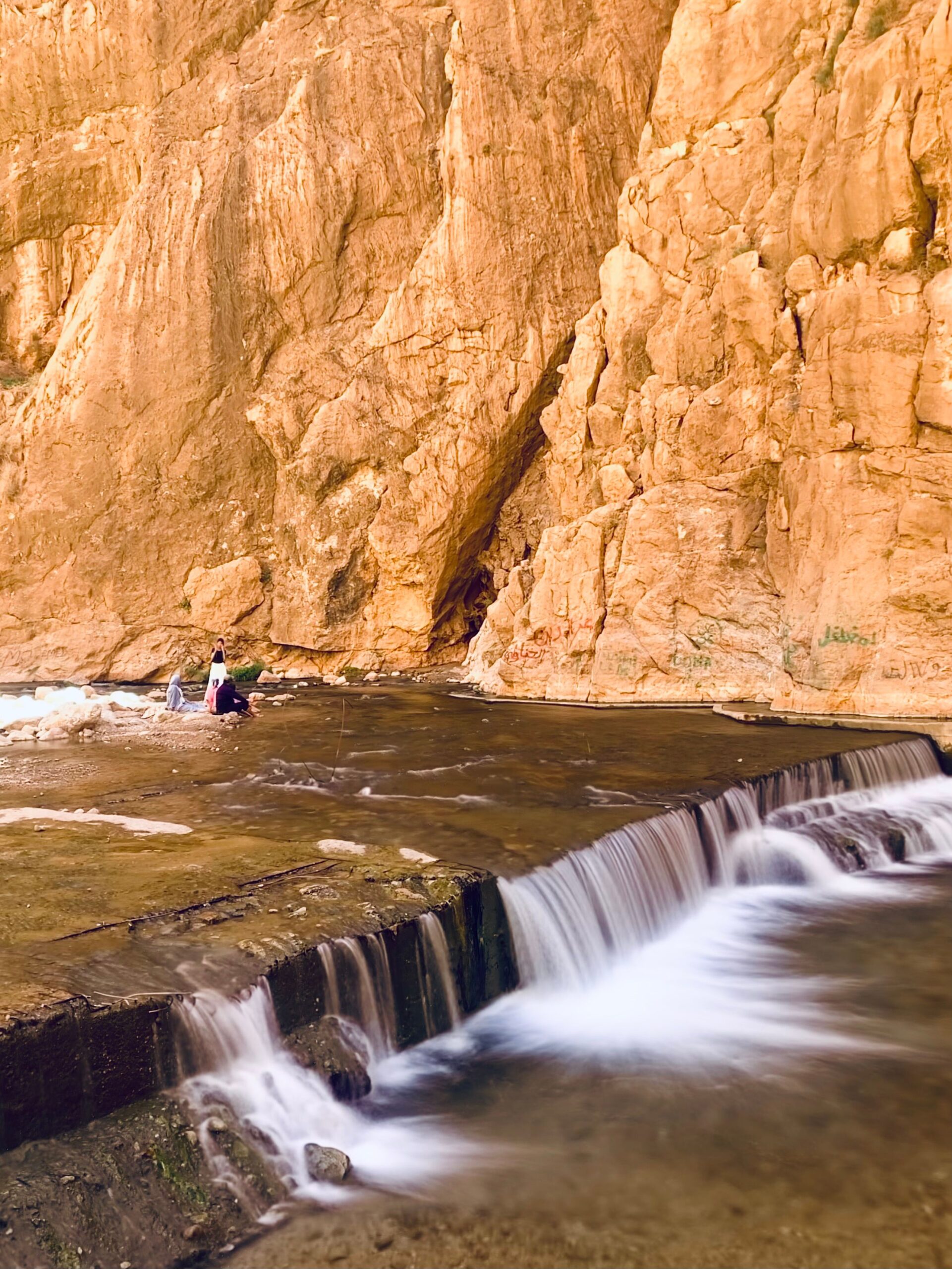
Todra Gorge, near Tinghir, is famous for its enormous canyon walls and spectacular narrow gorge section.
If you have enough time, visiting both is worthwhile. Rather than choosing one, you can include both on a southern Morocco road trip and experience two very different sides of the Atlas landscape.
Practical Tips for Driving Dadès Gorge
A little preparation can make the journey much more enjoyable.
Start early. Morning gives you cooler temperatures, better light, and more time to explore.
Drive slowly. The switchbacks are scenic, but they require concentration.
Carry water. Even when temperatures feel comfortable, having water with you is essential.
Keep your camera ready. Some of the best views appear unexpectedly along the road.
Wear comfortable shoes. You may want to leave the car for short walks around viewpoints or the valley.
Avoid driving at night. Mountain roads are much harder to navigate after dark, particularly around sharp bends.
Check weather conditions. Rain and winter weather can affect mountain roads and make driving more difficult.
Respect local communities. If you photograph people, ask permission first, especially in villages and rural areas.
Where to Stay Near Dadès Gorge
Staying overnight in the Dadès Valley can transform the experience from a quick sightseeing stop into a genuine road-trip experience.
Accommodation ranges from simple guesthouses to traditional kasbah-style hotels, many of which offer terraces overlooking the valley.
An overnight stay also gives you the opportunity to experience the landscape when the tourist traffic has decreased and the mountains become quieter.
For photographers, this can be particularly valuable because sunrise and sunset provide some of the best light of the day.
What to Pack for a Dadès Gorge Road Trip
You do not need specialized equipment for a standard visit, but a few essentials are useful:
- Comfortable walking shoes
- Reusable water bottle
- Sunglasses and sunscreen
- Light layers for changing temperatures
- Camera or smartphone
- Power bank
- Small backpack
- Cash for small purchases
- Light jacket outside the hottest months
If you plan to continue farther into the High Atlas on rougher roads, check the route and vehicle requirements beforehand rather than assuming the entire journey is suitable for a normal rental car. Some sections beyond the main paved tourist route become substantially rougher.
Frequently Asked Questions About Dadès Gorge
Is Dadès Gorge worth visiting?
Yes. Dadès Gorge is one of the most scenic destinations in southern Morocco, particularly for travelers who enjoy road trips, photography, mountains, and dramatic landscapes. The famous switchbacks are the highlight, but the valley, rock formations, villages, and river landscapes make the entire drive worthwhile.
Where is the famous Dadès Gorge road?
The famous winding section is in the upper Dadès Valley, reached by following the R704 from Boumalne Dadès toward the gorge. The road climbs through dramatic hairpin bends and offers panoramic views over the valley.
Can you drive Dadès Gorge with a rental car?
Yes, the main paved route can generally be driven with a standard passenger vehicle in normal conditions. However, the mountain road contains tight bends and steep sections, so drivers should be comfortable with mountain driving and take the route slowly. Rougher sections farther into the High Atlas may require a more suitable vehicle.
How long should I spend in Dadès Gorge?
A few hours is enough to see the famous road and major viewpoints, but spending a full day or staying overnight allows you to experience much more of the valley. If you are traveling toward the Sahara, an overnight stop in Dadès is a practical and scenic choice.
What is the best time to visit Dadès Gorge?
Spring and autumn are generally excellent seasons for comfortable temperatures and outdoor activities. For photography, early morning and late afternoon usually provide the most attractive light on the cliffs and winding road.
Why the Dadès Gorge Road Belongs on Your Morocco Itinerary
The Dadès Gorge road is one of those Moroccan experiences where the journey matters as much as the destination.
You start among green valley landscapes and traditional villages, gradually enter a world of red-rock cliffs and dramatic canyons, and eventually reach the spectacular switchbacks that have made Dadès famous among road-trip travelers and photographers.
For travelers heading toward the Sahara, it is also one of the most rewarding stops between Marrakech and the desert. Instead of simply passing through southern Morocco, you get the chance to slow down, explore the landscape, photograph the mountains, and experience one of the country’s most memorable scenic roads.
If you are planning a Morocco itinerary that includes Marrakech, Ouarzazate, Dadès Gorge, Todra Gorge, and the Sahara Desert, make sure you leave enough time to enjoy the road itself. The best part of Dadès is not simply arriving at the viewpoint — it is everything you discover along the way.
Plan Your Dadès Gorge Journey
Looking to include Dadès Gorge in a Morocco road trip or Sahara itinerary? A private itinerary can combine the dramatic landscapes of Dadès and Todra with the kasbahs of southern Morocco and the dunes of Merzouga, creating a smoother journey without having to plan every road and stop yourself.
Ready to explore Morocco beyond the usual tourist route? Plan your journey and discover the landscapes, villages, gorges, and desert that make southern Morocco unforgettable.