The Nomads’ Life in Merzouga Under the Desert Sky
Life Beneath an Endless Sky
Under the vast desert sky of Merzouga, where golden dunes meet the horizon and silence speaks louder than words, nomadic life continues to exist as it has for centuries. This is not simply a place of passage for travelers or a dramatic backdrop for photographs; it is a living landscape shaped by resilience, memory, and adaptation. For the nomads of Merzouga, the desert is both a challenge and a companion, demanding respect while offering freedom.
Life beneath this endless sky is defined by simplicity and endurance. Every movement, every decision, is guided by nature: the rhythm of the sun, the direction of the wind, and the rare promise of water. What may appear harsh to outsiders is, for nomadic families, a carefully balanced way of living rooted in deep knowledge of the land. Survival here is not accidental; it is inherited wisdom passed from one generation to the next.
Yet beyond hardship, the desert offers something rare in the modern world, a sense of belonging and inner calm. Nights under a sky filled with stars remind nomads of their place within a larger universe, fostering humility, spirituality, and strong communal bonds. In Merzouga, nomadic life is not merely about enduring the desert; it is about living in harmony with it, beneath a sky that watches over both struggle and serenity.
Who Are the Nomads of Merzouga?
The nomads of Merzouga are deeply rooted in the Saharan and Amazigh (Berber) heritage of southeastern Morocco. For generations, their identity has been shaped by movement, following seasonal patterns, grazing lands, and water sources across the desert and its fringes. This way of life is not defined by fixed borders or permanent settlements, but by an intimate understanding of the land and its rhythms.
Belonging to different tribes and extended families, these nomadic communities have traditionally relied on oral history to preserve their past. Stories, genealogies, and ancestral knowledge are passed down through spoken word, songs, and daily practice rather than written records. Through this living memory, values such as honor, hospitality, and mutual support remain central to nomadic society.
Although modern life has brought change, the nomads of Merzouga continue to see themselves as guardians of desert wisdom. Their identity is inseparable from the Sahara itself, a land that has taught them patience, adaptability, and respect for nature. Even as some families settle near villages or engage with tourism, the spirit of nomadism endures as a cultural identity rather than merely a way of moving from place to place.
Daily Life in the Desert
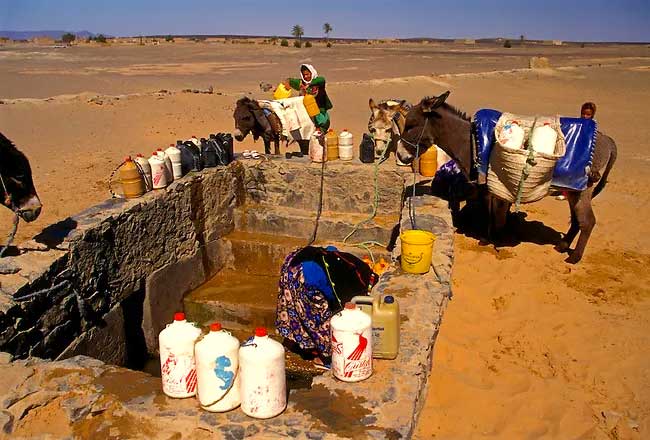
Daily life for the nomads of Merzouga follows the rhythm of the desert rather than the clock. Each day begins early, guided by the rising sun and the needs of livestock, which remain central to survival. Camels, goats, and sheep provide milk, meat, and trade, and their well-being determines when and where families move. Nomadic camps shift with the seasons, always in search of better grazing land and safer conditions.
Shelter is simple yet practical. Traditional tents, often made from woven goat or camel hair, are designed to withstand heat, wind, and sand. These tents can be assembled and dismantled quickly, allowing families to move efficiently when necessary. Inside, life is minimal but organized, with each item serving a clear purpose. Nothing is wasted in the desert, where excess is a burden.
Food and clothing reflect both necessity and tradition. Meals are modest, relying on what the desert provides: milk, dates, bread, and tea prepared slowly over open fires. Clothing is loose and layered, protecting the body from sun by day and cold by night. Through these everyday practices, nomads maintain a lifestyle built on adaptability, knowledge, and respect for the land that sustains them.
Between Survival and Freedom
Nomadic life in Merzouga exists in a delicate balance between survival and freedom. The desert demands constant effort, awareness, and resilience, yet it also offers a rare sense of independence. Free from rigid schedules and urban constraints, nomads shape their lives according to nature’s pace, finding meaning in simplicity rather than material wealth.
This freedom is deeply connected to responsibility. Every decision, when to move, where to settle, and how to share resources, affects the entire family or community. Cooperation and solidarity are essential, strengthening bonds between relatives and neighboring groups. In moments of difficulty, such as drought or illness, mutual support becomes a lifeline, reinforcing the collective spirit of nomadic society.
Despite the hardships, many nomads describe the desert as a place of inner peace. The vast open spaces, the silence broken only by wind or footsteps in the sand, create a powerful sense of clarity and reflection. Under the endless sky of Merzouga, survival is not just about enduring harsh conditions; it is about preserving a way of life that values freedom, dignity, and harmony with nature.
Women’s Role in Nomadic Life
Women are at the heart of nomadic life in Merzouga, carrying responsibilities that sustain both family and culture. They manage the household, care for children, prepare food, and often take charge of milking animals and preserving dairy products. Their work begins before sunrise and continues long after sunset, making them essential to the daily functioning of the nomadic camp.
Beyond their physical labor, women are the keepers of tradition. They weave tents and rugs, create clothing, and pass down skills and knowledge to younger generations. Through songs, stories, and daily teaching, they preserve language, customs, and values that might otherwise disappear. Their role ensures continuity in a way of life that relies heavily on oral transmission.
Nomadic women also embody resilience and quiet strength. Living in harsh conditions requires adaptability, patience, and emotional endurance. While their contributions are often understated, they form the backbone of nomadic society. Under the desert sky of Merzouga, women are not only caretakers of the home, but they are guardians of identity, heritage, and survival itself.
Experience the Merzouga Desert in Refined Luxury
Traditions, Music, and Storytelling
As night falls over the Merzouga desert, traditions come alive beneath the stars. After long days shaped by sun and sand, nomadic families gather around the fire, where warmth, light, and shared presence create a sense of unity. These moments are more than simple rest; they are opportunities to transmit culture and strengthen bonds.
Music plays a vital role in nomadic life. Rhythms created with drums, clapping, and simple instruments echo across the dunes, often accompanied by songs that tell stories of travel, love, loss, and the desert itself. These melodies preserve history and emotion, connecting past generations with the present. Through music, nomads express both hardship and hope.
Storytelling is equally essential. Elders share legends, moral tales, and personal experiences, teaching younger members about survival, honor, and respect for nature. These oral traditions replace written records, ensuring that knowledge lives on through memory and voice. Under the vast desert sky, music and storytelling become living bridges between generations, keeping nomadic identity alive in Merzouga.
Modern Changes and Challenges
In recent decades, nomadic life in Merzouga has faced profound changes. Increased access to roads, schools, and basic services has encouraged many families to settle near villages or towns. While this shift offers education and healthcare opportunities, it also threatens the continuity of traditional nomadic practices that rely on movement and deep desert knowledge.
Climate change has become one of the greatest challenges. Prolonged droughts, shrinking grazing lands, and unpredictable weather patterns make survival increasingly difficult. Water sources are less reliable, forcing nomads to travel farther or reduce livestock, which directly affects their livelihood. These environmental pressures accelerate the abandonment of nomadic life for more stable alternatives.
Tourism presents both opportunities and risks. It can provide income and visibility for desert communities, but it may also lead to cultural simplification or loss of authenticity. Balancing economic survival with cultural preservation is an ongoing struggle. For the nomads of Merzouga, the challenge today is not only to survive the desert, but to protect their identity in a rapidly changing world.
Nomadic Life Today: Adapting Without Disappearing
Today, nomadic life in Merzouga is no longer frozen in time, but it has not vanished either. Many nomadic families now live between two worlds, maintaining traditional practices while selectively embracing modern tools. Mobile phones, solar panels, and occasional access to vehicles help improve communication and safety without completely abandoning the desert way of life.
Younger generations face difficult choices. Education and employment opportunities often pull them toward towns and cities, yet their identity remains strongly tied to the desert. Some return seasonally to support their families or participate in cultural activities, creating a new form of semi-nomadic life that blends mobility with stability. This evolution shows resilience rather than loss.
Efforts to preserve nomadic culture are increasingly important. Through storytelling, craftsmanship, music, and responsible tourism, nomads continue to share their heritage on their own terms. Adapting without disappearing means honoring the past while responding to present realities. Under the desert sky of Merzouga, nomadic life survives not as a relic, but as a living, evolving tradition.
Lessons from Life Under the Desert Sky
Nomadic life in Merzouga offers powerful lessons in resilience, simplicity, and respect for nature. In a world driven by speed and consumption, the nomads remind us that survival does not depend on abundance, but on balance and understanding. Their way of life shows how humans can adapt to even the harshest environments without losing dignity or purpose.
Living under the vast desert sky shapes a unique worldview, one rooted in patience, cooperation, and spiritual connection to the land. Every challenge, from scarcity of water to isolation, reinforces values that modern societies often overlook: community over individualism, knowledge over possession, and harmony over control.
As nomadic life continues to evolve, its essence remains deeply meaningful. Preserving this heritage is not only about protecting a cultural identity, but also about safeguarding a philosophy of living that the world still needs. Under the desert sky of Merzouga, the nomads’ story endures as a testament to human strength, wisdom, and adaptability.