
The Power of the Moroccan Amazigh Woman and her Social Position
The Amazigh people, also known as Berbers, are the indigenous inhabitants of Morocco, with a history that stretches back thousands of years. Deeply rooted in the mountains, deserts, and plains of the country, Amazigh culture has shaped Morocco’s identity through its language, traditions, and values. At the heart of this rich heritage stands the Amazigh woman, strong, resilient, and influential, yet often underrepresented in mainstream narratives.
The Moroccan Amazigh woman has never been a passive figure. Historically and socially, she has played a central role within the family, the community, and the preservation of cultural identity. From managing households and contributing to the local economy to transmitting language and traditions across generations, her influence extends far beyond the private sphere.
Cultural Guardians and Identity Keepers
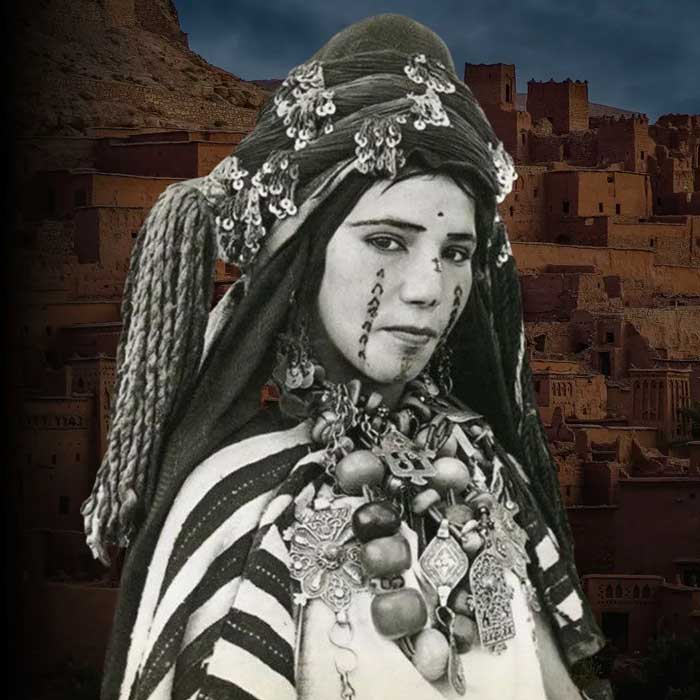
The Amazigh woman plays a crucial role as the guardian of culture and identity. Through her daily practices, she ensures the survival of Amazigh traditions, language, and values in a rapidly changing world. Much of what defines Amazigh identity is transmitted through women, making them key figures in cultural continuity.
One of the most important roles of Amazigh women is the preservation and transmission of the Tamazight language. As mothers and caregivers, they are often the first teachers, passing the language to children through everyday communication, songs, stories, and rituals. This oral transmission has been vital in keeping Tamazight alive across generations, especially during periods when it lacked official recognition.Today, institutions such as the Royal Institute of Amazigh Culture (IRCAM) support the promotion, research, and preservation of the Tamazight language and Amazigh cultural heritage in Morocco.
Amazigh women are also custodians of oral heritage, including poetry, lullabies, folktales, and traditional songs that express collective memory, values, and emotions. Their traditional clothing, jewelry, and symbolic patterns, often handmade, carry deep meanings related to protection, fertility, nature, and identity. Even traditional tattoos, historically worn by Amazigh women, served as powerful cultural and spiritual symbols.
By safeguarding these cultural elements, Amazigh women act as living archives of their people’s history. Their role as identity keepers goes beyond nostalgia; it is an active form of resistance and pride that ensures Amazigh culture continues to thrive within Moroccan society and beyond.
Amazigh Women in Contemporary Moroccan Society
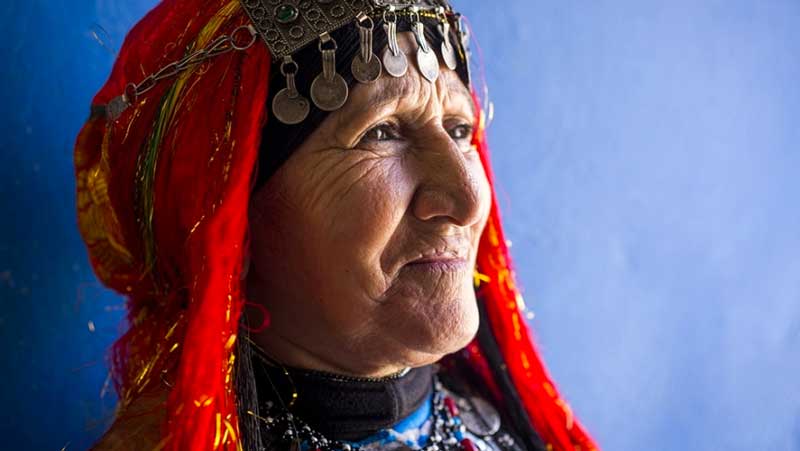
In modern Morocco, Amazigh women are redefining their roles while remaining deeply connected to their cultural roots. Increased access to education, media, and public platforms has allowed many Amazigh women to step into new spaces of influence, transforming traditional forms of strength into visible social, cultural, and political engagement.
Today, Amazigh women are present in education, business, arts, activism, and politics. Many have become teachers, researchers, entrepreneurs, and cultural advocates working to promote Amazigh language rights, women’s empowerment, and social justice. Through associations and civil society organizations, they actively participate in community development, literacy programs, and cultural preservation initiatives, particularly in rural areas.
In the creative sphere, Amazigh women express their identity through music, visual arts, literature, and fashion, often blending ancestral symbols with contemporary expression. These voices challenge stereotypes and offer new narratives about Amazigh womanhood—ones that highlight agency, creativity, and leadership.
Despite these advances, Amazigh women continue to navigate the balance between tradition and modernity. Their strength lies in adaptation: embracing progress while honoring heritage. In doing so, they represent a dynamic model of empowerment that reflects both continuity and change within Moroccan society.
Experience the Merzouga Desert in Refined Luxury
Challenges and Ongoing Struggles
Despite their historical strength and growing visibility, Amazigh women continue to face significant challenges that affect their social position. These difficulties are often shaped by geographic, economic, and social factors, particularly in rural and mountainous regions where access to basic services remains limited.
One of the main challenges is unequal access to education and employment opportunities. In some areas, girls still face early school dropout due to poverty, distance from schools, or traditional expectations. Limited access to healthcare and social infrastructure further deepens vulnerability, especially for women responsible for families and agricultural labor.
Amazigh women also face the broader issue of gender inequality within legal and social frameworks. While reforms have improved women’s rights in Morocco, gaps remain between legislation and lived reality. Cultural recognition does not always translate into economic or political equality, and Amazigh women often experience a double marginalization, both as women and as members of an indigenous culture.
At the same time, globalization and modernization pose challenges to cultural preservation. Younger generations may feel disconnected from their language and traditions, placing additional pressure on women as cultural transmitters. Yet, these struggles have also strengthened Amazigh women’s resilience, pushing them to organize, advocate, and innovate in order to protect both their rights and their identity.
The Amazigh Woman as a Symbol of Resilience and Empowerment
The Moroccan Amazigh woman stands as a powerful symbol of resilience, shaped by centuries of adaptation, resistance, and cultural pride. Her strength is not rooted in dominance, but in endurance, the ability to sustain families, preserve identity, and navigate change while remaining deeply grounded in tradition.
Throughout history, Amazigh women have demonstrated an extraordinary capacity to adapt to social, economic, and political transformations. Whether through agricultural labor, cultural preservation, education, or activism, they continuously redefine empowerment on their own terms. Their power lies in their versatility: being caregivers, workers, leaders, and storytellers all at once.
Today, the Amazigh woman represents a bridge between past and future. She honors ancestral knowledge while embracing new opportunities, transforming inherited wisdom into modern influence. This balance makes her a model of empowerment that is collective rather than individual, focused on community well-being, cultural continuity, and social responsibility.
As a symbol, the Amazigh woman embodies dignity, courage, and identity. Recognizing her role is not only an act of justice but also an acknowledgment of her essential contribution to Morocco’s cultural richness and social strength.
Conclusion
The power of the Moroccan Amazigh woman is deeply woven into the social, cultural, and historical fabric of Morocco. From her roots in ancient Amazigh societies to her evolving role in contemporary life, she has consistently held a position of influence shaped by responsibility, resilience, and cultural pride. Her strength is expressed not only through leadership and economic contribution but also through her role as a guardian of language, traditions, and collective memory.
Despite ongoing challenges, Amazigh women continue to assert their presence and redefine their social position, balancing tradition with modern aspirations. Their journey reflects a broader struggle for recognition, equality, and cultural preservation within Moroccan society.
Recognizing and valuing the Amazigh woman means honoring a legacy of empowerment that has endured across generations. Her story is not only one of the past, but a living narrative that continues to shape Morocco’s identity and future.